


INSTALLATION LOG // >
Exhibit Entry Twenty-Two Distortion Dialogue
There’s a dress on the wall.
Not on a hanger. Not in a museum case.
Hung like a question. Pinned open like a wound.
Threaded with red, green, black.
There are needles still lodged in the fabric.
Not by accident.
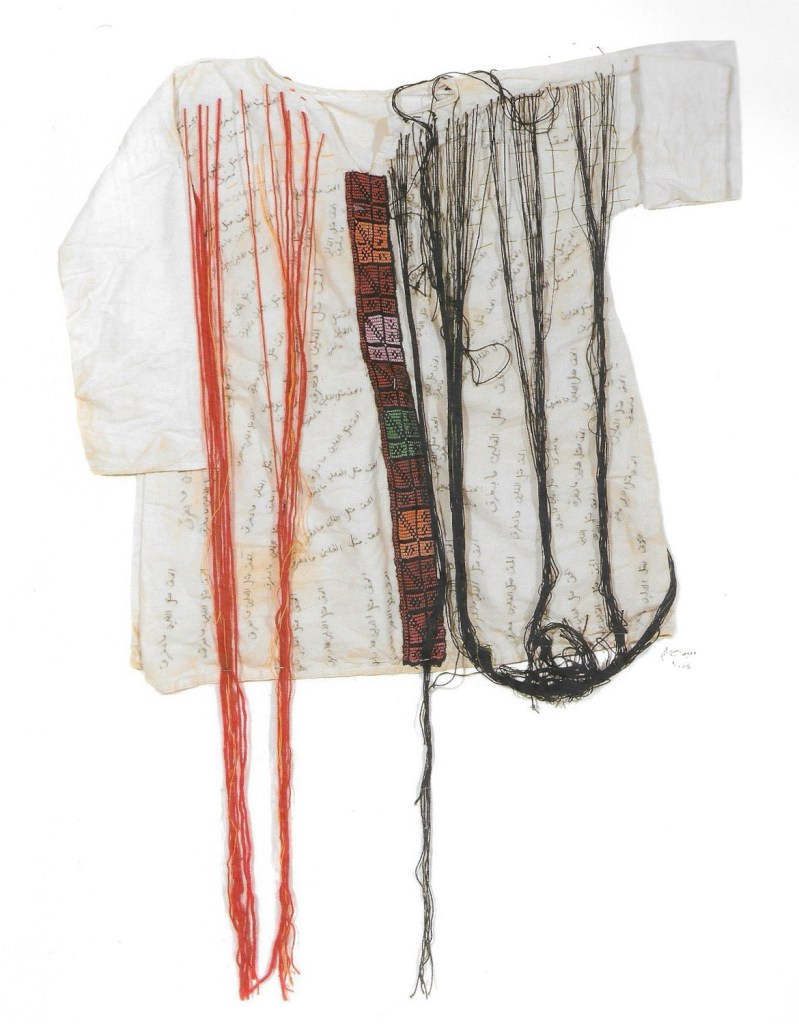
This is not clothing. This is reclamation.
Buthina Abu Milhem is a Palestinian artist who works with thread, fabric, and fragments of memory. She doesn’t paint on canvas she builds her canvases from what’s left. From dresses torn by time and exile. From embroidery handed down like stories. From the kind of material you wear until it falls apart, because it came from your grandmother and smells like earth.
Her art lives in the seam between preservation and protest. She uses traditional Palestinian embroidery—tatreez—not as decor, but as declaration. These aren’t just patterns. They are maps. Lineage. Territory. Loss.
Abu Milhem was born in Umm al-Fahm, in present-day Israel. She was once a kindergarten teacher. Her hands were already trained to build, to soothe, to make. But over time, her creative instinct pushed beyond the classroom. She studied under Palestinian artist Farid Abu Shakra and later earned qualifications as a senior art instructor. Her medium? The dress.

Palestinian thobe by etsy seller Ramallah Embroidery
Not just any dress—the thobe. Ancestral, familiar, intricately embroidered. For Palestinian women, the thobe is more than garment. It’s geography. A woman from Ramallah can be known by the style of her sleeve. The red cross-stitches of a Galilee dress might tell of fertility, or mourning, or defiance. Abu Milhem knows this language. And she writes in it fluently—then disrupts it.
She doesn’t leave these dresses intact. She deconstructs them, reassembles them, pierces them with pins and threads in the colors of the Palestinian flag. The results are haunting. Sometimes, they hang limp, like bodies. Sometimes, they are stretched wide, like arms raised in surrender or resistance. In her 2021 piece The Needle Vanquishes the Tailor, a thobe is displayed, violently interrupted, stitched shut and split open again. It’s no longer something you could wear. But it’s something you can feel.
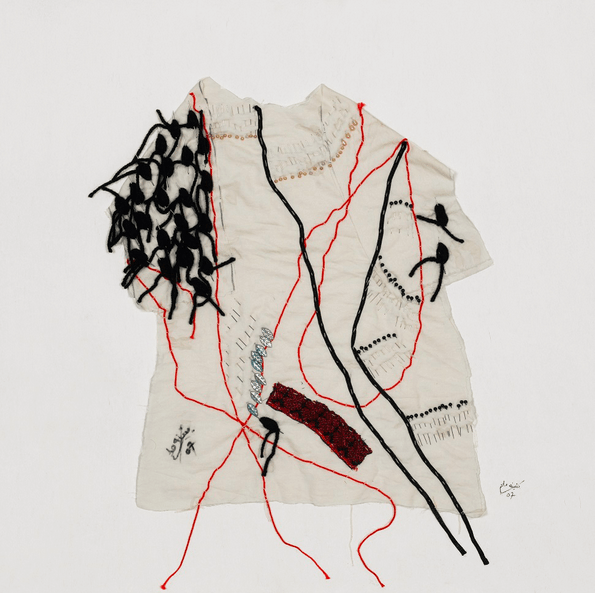
And for centuries, that feeling has been dismissed.
Fabric art has long been relegated to the realm of “craft” rather than “art.” Quilting. Embroidery. Weaving. These were the province of women. Domestic. Decorative. Dismissed. As if creating with needle and thread was not also an act of imagination. As if centuries of tactile knowledge—of stitch and story—didn’t constitute a form of mastery.
Feminist art historians have long pointed out the irony: galleries overrun with paintings of women, often nude, passive, and prettified—while women’s own creative labor, often more intricate and deeply symbolic, was ignored.
Abu Milhem subverts this whole tradition.
She doesn’t depict women. She reanimates their work. She doesn’t show us the female form as object—she shows us the female legacy as art. In doing so, she reclaims the thobe not only from displacement, but from dismissal. She insists: this is art. This is resistance. This is a body that survives.
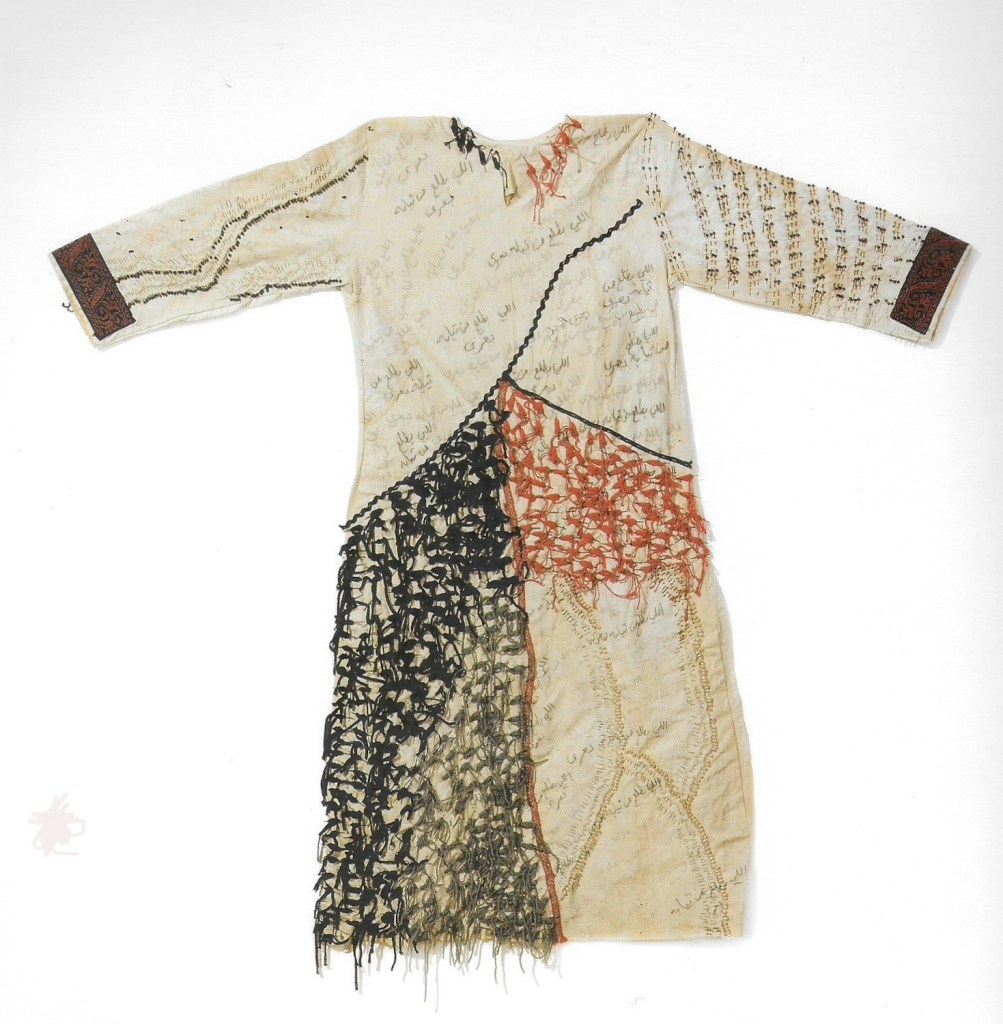
Art made in the shadow of occupation is never just art.
It is elegy. It is evidence.
It is an act of survival.
Abu Milhem’s pieces live at the intersection of intimacy and rebellion. They do not scream—but they never stay quiet. Her works have been exhibited in Palestine, Jordan, the Netherlands, and beyond. But they always point back to home.
She doesn’t work in oil or marble.
She works in cloth.
In what’s torn and mended.
In what carries the weight of history.
And in her hands, a dress becomes a monument.
A map of a country that still exists—if only in thread.
Feed the Paws…
💜 Help keep the chaos caffeinated and the cats in biscuits. Every crumb helps. Whether you’re funding feline existential monologues, glitchy portals, or late-night creativity spirals, your support feeds the moglets (and occasionally, the magic). 🐈⬛
Make a monthly donation
Make a yearly donation
Choose an amount
Or enter a custom amount
Thank you, fellow wanderer. Your generosity has been noted in the Book of Kindness, which the cats may or may not use as a pillow.
Your contribution is appreciated.
Your contribution is appreciated.
DonateDonate monthlyDonate yearlyDiscover more from River and Celia Underland
Subscribe to get the latest posts sent to your email.
