

INSTALLATION LOG // >
Exhibit Entry Twenty-Two Distortion Dialogue
“You brightened our world, our little princess.”
It should have been a day of celebration.
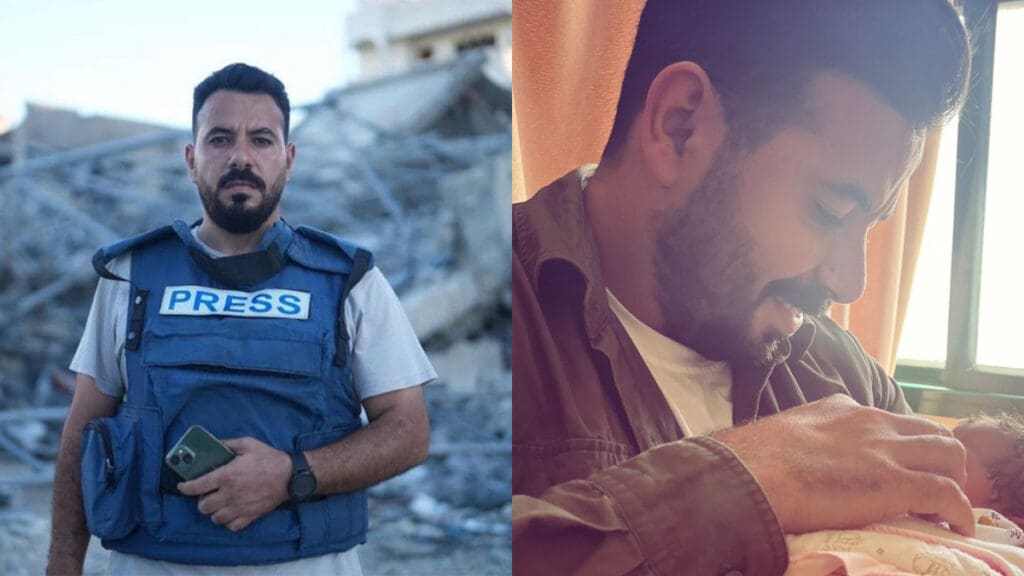
On May 7, 2025, Yahya Sobeih, a 33-year-old Palestinian journalist from Gaza City, posted a photo online. He was holding his newborn daughter. His face—drawn but glowing—bore the unmistakable softness of a man who had just become a father again. His caption read:
“You brightened our world, our little princess. Thanks to God who blessed us with the birth of our precious daughter.”
A few hours later, he was dead.
An Israeli airstrike targeted the Al-Rimal neighborhood, once considered one of the “safer” areas of Gaza City. The bombing killed at least 22 people. Yahya was one of them. He had just come home from the hospital. He had just begun the next chapter of his life.
He died as so many do in Gaza: not in uniform, not on the battlefield, but at home, with his family nearby. He died because he lived in a place where being born, loving your child, or reporting the truth can be fatal acts. His death was not collateral—it was policy.
This is what genocide does: it makes no room for celebration.
It severs families not just at the root, but at the future.
A daughter gains a name and loses a father in the same breath.
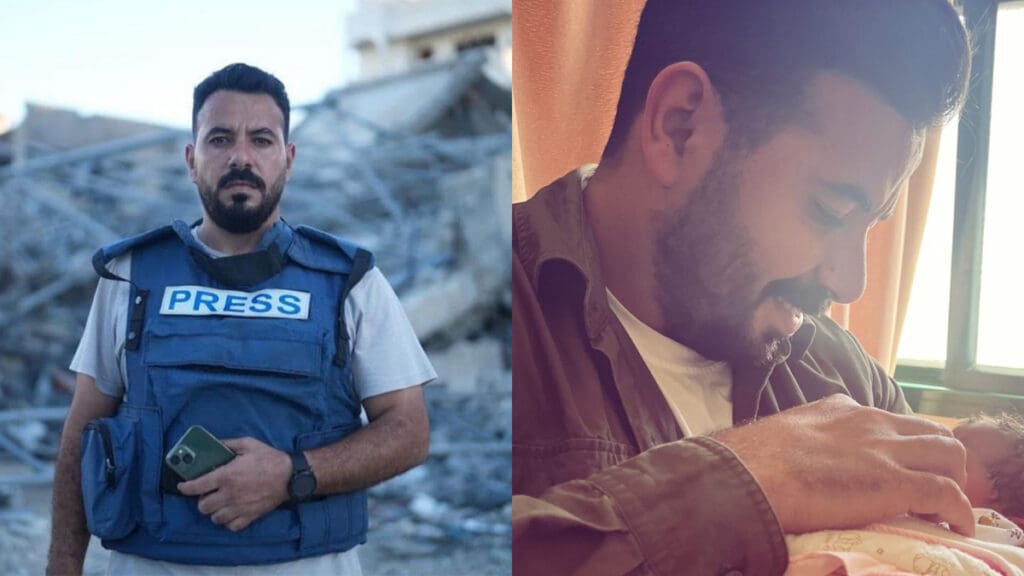
And Yahya wasn’t just a father. He was a journalist. An editor. A voice.
He worked as a freelance journalist and photojournalist for Sabaq 24 News Agency and Palestine Post, where he reported on the realities of daily life under siege. Markets, shelters, schools turned morgues—he documented it all. His stories reminded the world that Gaza was not a soundbite. It was a home.
Even while suffering from chronic kidney pain, he refused to stop. His sister recalled:
“He would lean on his friends from the intensity of the pain, but he would not leave the field.”
That pain didn’t deter him. The bombs didn’t deter him. The risk didn’t deter him.
Because telling the truth in Gaza isn’t a profession. It’s an act of survival.
Yahya also organized food and water distributions for displaced families. He stayed in Gaza because he believed his people deserved to be seen. His lens became a bridge between life and loss, dignity and destruction.
By May 2025, over 220 journalists had been killed in Gaza since October 2023. The most dangerous place in the world for a journalist isn’t a battlefield—it’s a living room in Rafah. A press vest offers no protection. A baby in your arms offers no mercy.
This is how war breaks the body.
This is how genocide breaks the family.
Yahya is survived by his wife, Amal, and their three children: Baraa (4), Kenan (3), and their unnamed newborn daughter. She will grow up with a ghost where a father should be. She will have a photograph instead of bedtime stories. A headline instead of lullabies.
We are told to grieve with context.
So here is the context: Yahya Sobeih was a father.
He had just met his daughter.
He was holding her in his arms.
And then he was gone.
His final act wasn’t a report—it was love.
His final story was his own. And it was interrupted.
Now we say his name not just to mourn him, but to mark what was stolen.
Because war doesn’t just kill people.
It takes futures.
Prompt+Original
Edit 1
Edit 2

Feed the Paws…
💜 Help keep the chaos caffeinated and the cats in biscuits. Every crumb helps. Whether you’re funding feline existential monologues, glitchy portals, or late-night creativity spirals, your support feeds the moglets (and occasionally, the magic). 🐈⬛
Make a monthly donation
Make a yearly donation
Choose an amount
Or enter a custom amount
Thank you, fellow wanderer. Your generosity has been noted in the Book of Kindness, which the cats may or may not use as a pillow.
Your contribution is appreciated.
Your contribution is appreciated.
DonateDonate monthlyDonate yearlyDiscover more from River and Celia Underland
Subscribe to get the latest posts sent to your email.
