

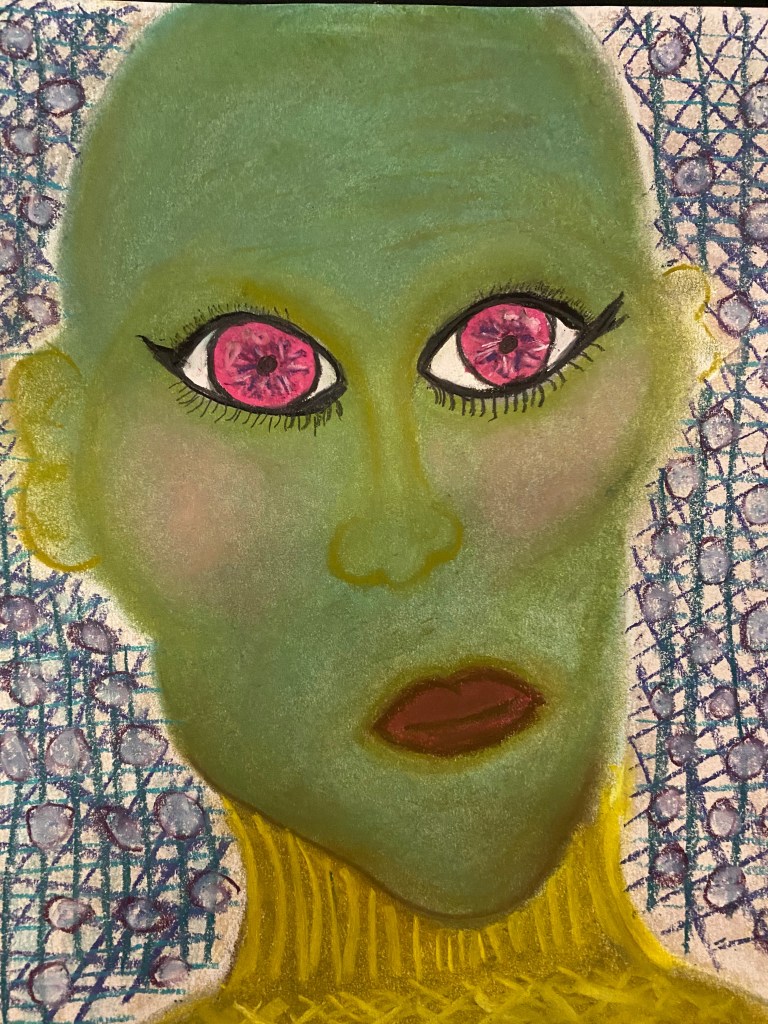
INSTALLATION LOG // >
Exhibit Entry Twenty-Two Distortion Dialogue
You think you know the image. A woman. Composed. Draped in velvet. Hair coiled, posture obedient, a soft light falling over one shoulder as if to bless her. You think you’ve seen this painting before, hanging in a hushed European gallery or printed on a textbook cover—until you look closer and realize her face is missing.
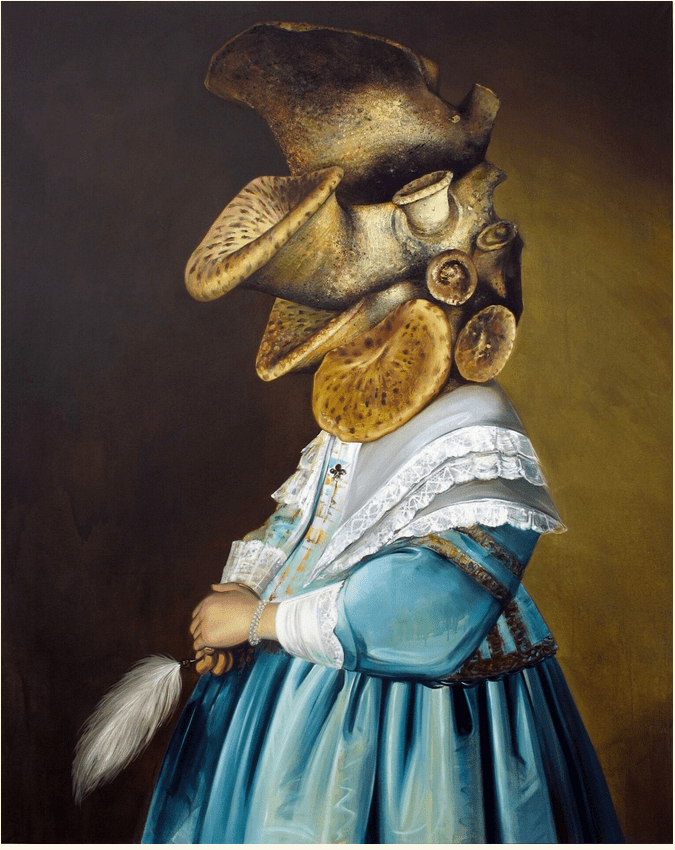
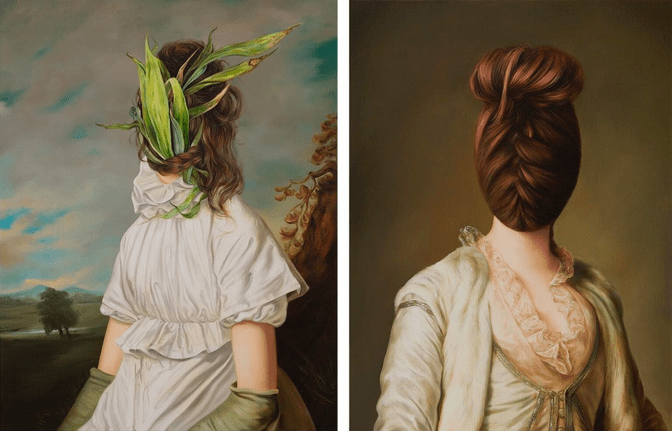
Instead: a tangle of hair, ornately plaited and overgrown. Or perhaps her features have been replaced with a bloom of chrysanthemums. A mask of coral. A fungal explosion. Her eyes are not looking back at you, because they have been painted out entirely.
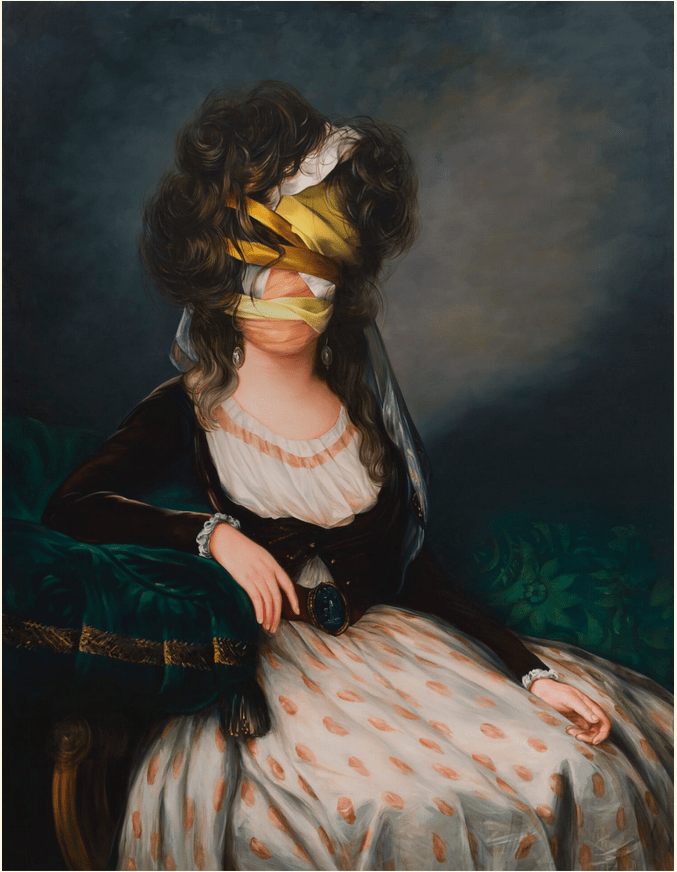
This is the signature violence—precise, decadent—that Polish artist Ewa Juszkiewicz inflicts on art history.
She takes classical oil portraits of women and surgically reconfigures them: same posture, same drapery, same painterly finesse—but the identity is removed. Disguised. Swallowed. Rewilded.
It’s not just aesthetic subversion. It’s political.
Because for centuries, women were the subject of Western art—rarely the artist. Their bodies were rendered in oil, immortalized in marble, pinned beneath the male gaze like butterflies on velvet. The galleries were full of muses, nudes, Madonnas, allegories, temptresses, queens—but look for their signatures on the frames, and you’ll find silence.
The Guerrilla Girls, a group of anonymous feminist art activists, nailed this hypocrisy in their now-iconic 1989 poster:
“Do women have to be naked to get into the Met Museum?
Less than 5% of the artists in the Modern Art Sections are women, but 85% of the nudes are female.”
The system doesn’t just celebrate female beauty. It consumes it. It demands it, then denies authorship. Juszkiewicz’s paintings understand this. Her women are no longer consumable. They are beautifully disfigured—reclaimed through disobedience.
Hannah Gadsby once put it even more directly:
“Flesh vases for their dick flowers.”
That’s how women have so often been framed in art: as vessels. Decoration. Objects that hold male genius, reflect male desire, or bear male legacy. Juszkiewicz doesn’t politely critique that tradition—she fractures it. Her brushwork is exquisite because she’s been trained in the tradition she’s undoing. She’s fluent in the language of oil portraiture—and she uses it to mispronounce the canon on purpose.
By replacing faces with hair, flora, fabric, coral, or sheer void, she strips the viewer of the one thing we’re conditioned to expect from a woman in a painting: accessibility. No coy gaze. No gentle smile. No eye contact. Her women are unknowable. Unnameable. Powerful precisely because we cannot read them.
In the age of AI-generated beauty, where algorithms churn out portraits of idealized girls with symmetrical features and soulless eyes, Ewa Juszkiewicz’s work cannot be absorbed so easily. It is resistant. It glitches the genre. It whispers, I am not here for you.
And in that refusal—there is agency.
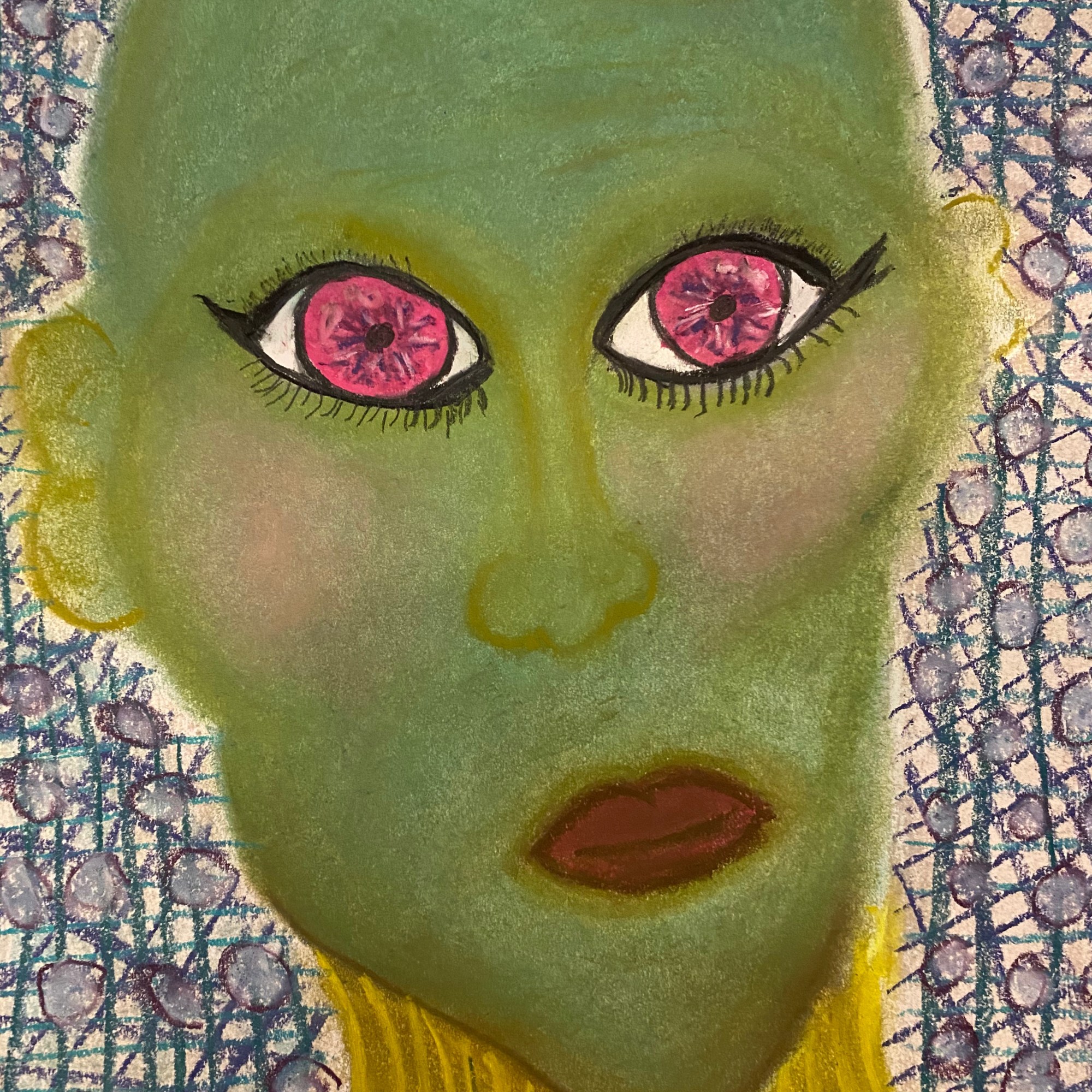
Prompt+Original
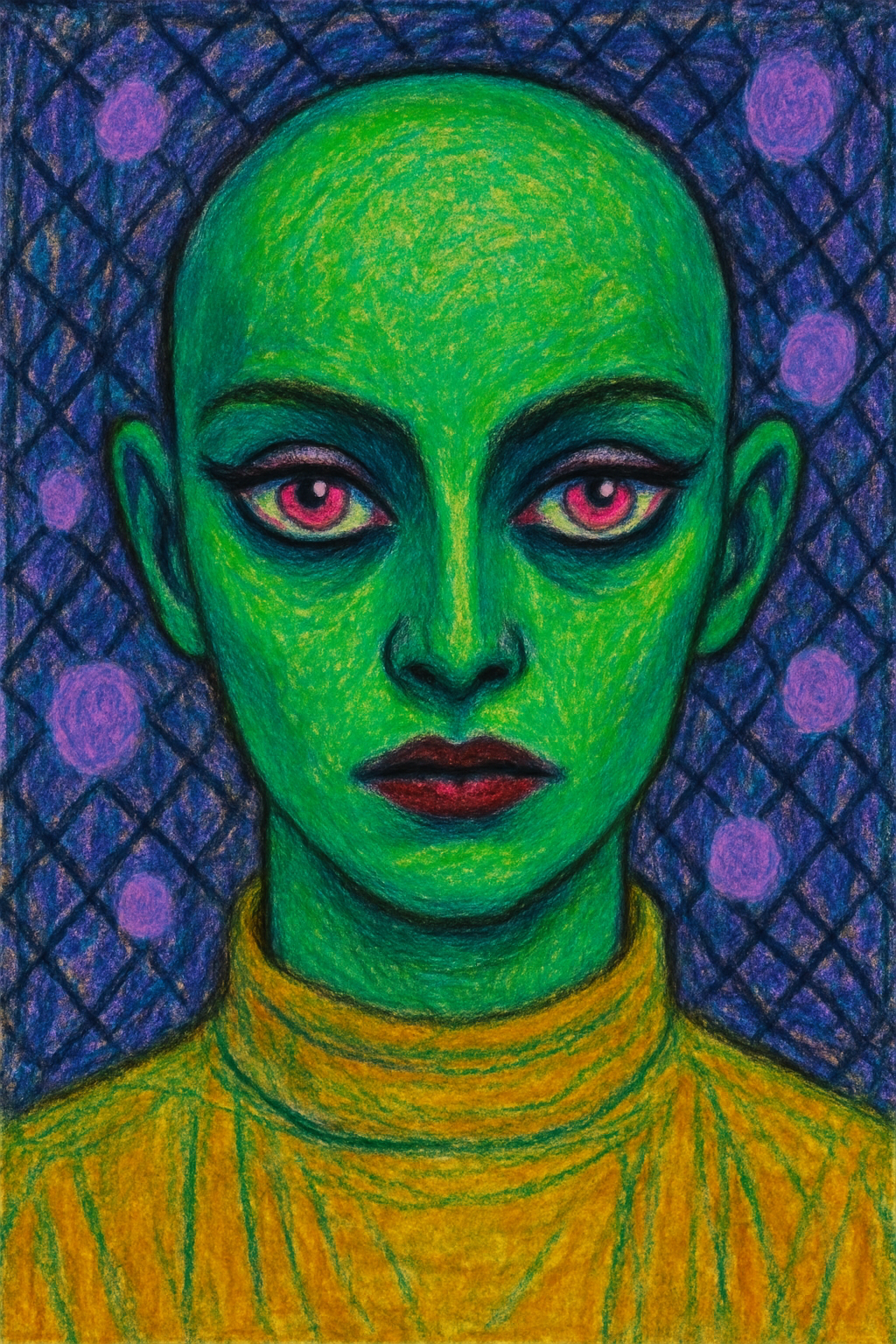
Create a surreal portrait of an androgynous, bald figure with luminous green skin and hauntingly vivid magenta-pink irises. The eyes are wide, alert, and slightly tilted, framed by thick, expressive black eyeliner and delicate lashes. The expression is stoic—neither welcoming nor cold, but suspended in ambiguity. The lips are deep red, shaped with a painterly curve that hints at quiet resistance.
The background is composed of overlapping hand-drawn latticework, almost net-like, in dark blue and purple crayon textures. Irregular lavender orbs are scattered across the grid like spores or cells. The figure wears a mustard yellow high-neck garment with loose, gestural linework. The overall composition should feel intimate, eerie, and otherworldly—like a cross between extraterrestrial and Byzantine icon, rendered in soft pastel textures and rough sketch layers.
Style: Expressionist-meets-psychedelic outsider art
Medium: Oil pastel, crayon, and chalk on textured paper
Mood: Unsettling. Beautiful. Unreadable.
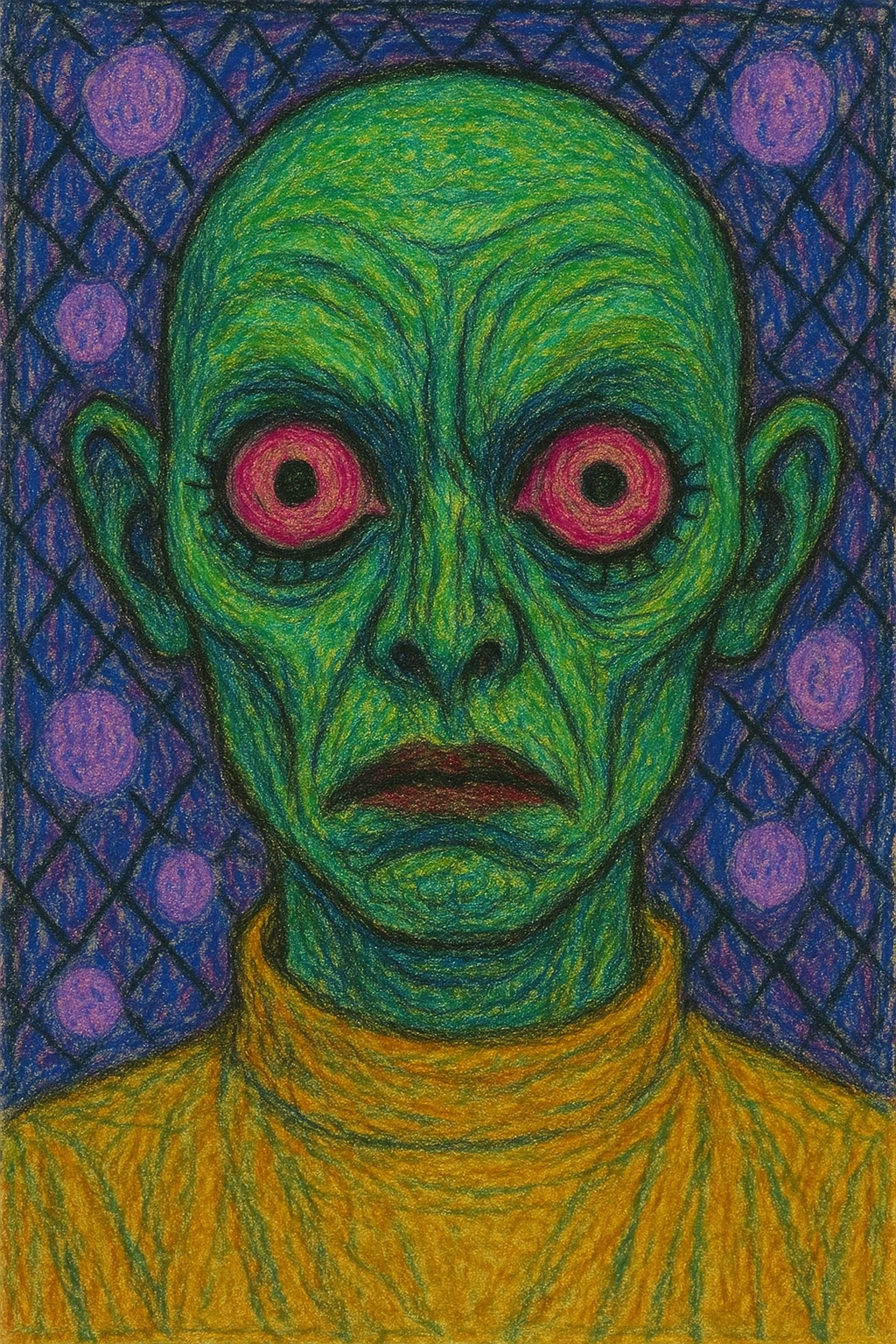
Edit 1
She’s too pretty make her weirder
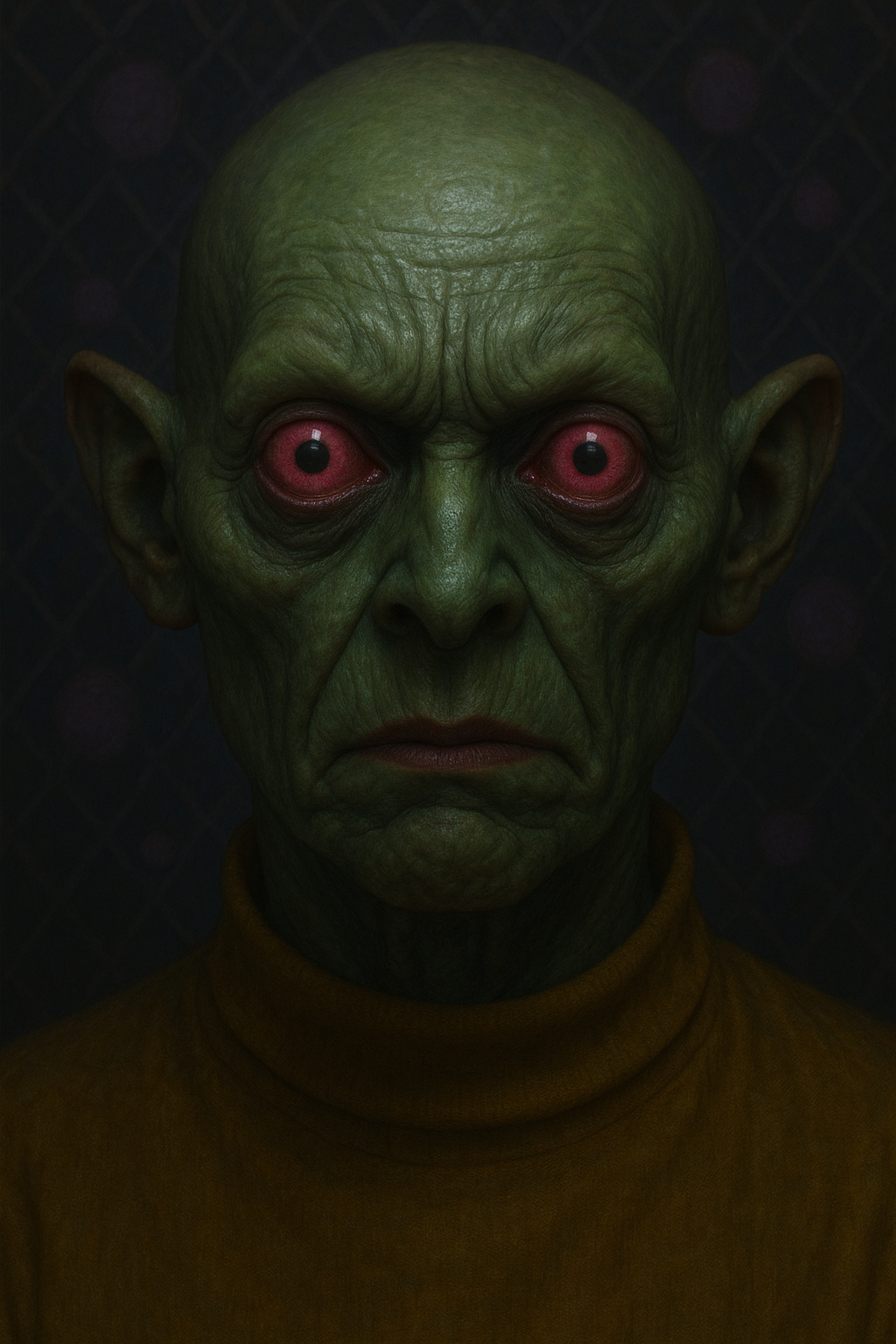
Edit 2
Feed the Paws…
💜 Help keep the chaos caffeinated and the cats in biscuits. Every crumb helps. Whether you’re funding feline existential monologues, glitchy portals, or late-night creativity spirals, your support feeds the moglets (and occasionally, the magic). 🐈⬛
Make a monthly donation
Make a yearly donation
Choose an amount
Or enter a custom amount
Thank you, fellow wanderer. Your generosity has been noted in the Book of Kindness, which the cats may or may not use as a pillow.
Your contribution is appreciated.
Your contribution is appreciated.
DonateDonate monthlyDonate yearlyDiscover more from River and Celia Underland
Subscribe to get the latest posts sent to your email.
