


INSTALLATION LOG // >
Exhibit Entry Twenty-One Distortion Dialogue
“As a small short Black woman I have had to always affirm my existence and place… So these images are indicative of me standing my ground on this planet and showing how important I feel I am, as we should all feel we are.”
— RaFia Santana

To make work that is bright, femme, and glitchy is radical—especially as a Black, nonbinary artist. In an art world that still clings to minimalism and “seriousness” as markers of worth, RaFia’s work challenges the assumption that softness, glamour, or humor can’t be revolutionary. Their self-portraiture isn’t just about image—it’s about autonomy. And in a culture that surveils and distorts marginalized bodies, choosing how to be seen is its own form of resistance.
“Pink makes me feel soothed. It makes me feel happy to look at it.”
— RaFia Santana,

This week, we’re highlighting digital creators who resist AI mimicry not by avoiding technology—but by using it intentionally, emotionally, and ethically. RaFia Santana doesn’t just make art online—they make art about being online, and what it means to exist, visibly and vulnerably, in a world of constant digital reproduction.
RaFia Santana doesn’t separate their art from their activism. The two are entangled—glitched together in ways that reflect the messy, embodied urgency of their message. In 2016, they launched the project #PAYBLACKTiME, a grassroots mutual aid initiative aimed at directly redistributing funds to Black and brown people through small, one-time cash gifts. It wasn’t backed by a nonprofit or an institution—it was a digital intervention in the face of systemic economic injustice.
Their projects often use the internet not just as a gallery, but as a site of protest, healing, and redistribution. Whether it’s animated gifs that pulse with affirmations, interactive work that centers queer Black voices, or surreal portraits that play with the politics of gaze and visibility, RaFia’s work insists on justice as an aesthetic, a structure, and a call to action.
In a digital ecosystem where aesthetics are endlessly scraped, flattened, and repackaged—Santana’s work reminds us that intention matters. That context matters. That who benefits from the image is just as important as the image itself.
Their activism isn’t an accessory to their art—it’s the blueprint.

One of RaFia Santana’s most important contributions isn’t a static artwork—it’s a living, breathing act of redistribution. #PAYBLACKTiME is a digital mutual aid campaign RaFia launched to funnel money from non-Black supporters directly to Black people, no questions asked. It transforms the concept of social capital into literal capital, challenging viewers to confront the value of their allyship in tangible terms. In RaFia’s world, digital space isn’t just for aesthetics—it’s a site of protest, care, and real-time action. This project embodies the radical potential of using art not only to depict justice, but to practice it.
RaFia Santana’s work defies replication because it isn’t just visual—it’s visceral. It’s built from lived experience, community need, and personal defiance. You can’t copy that. You can’t scrape it from a timeline or feed it into a model and expect it to echo back with the same pulse.
What makes their art powerful isn’t just the pinks and purples, the gifs and gradients—it’s the intimacy and intention woven into each piece. The humor, the anger, the vulnerability. The refusal to separate art from activism, or softness from strength. AI can mimic color palettes. It can replicate typefaces. But it cannot initiate solidarity. It cannot center Black trans lives with care and urgency. It cannot offer mutual aid.
RaFia’s work is a reminder that art made from the gut, the glitch, and the grind of real life carries something no algorithm can touch: humanity.
And in this moment—where automation looms and aesthetics are flattened—the most radical thing a digital artist can do is remain unmistakably, uncompromisingly human
Prompt+Original
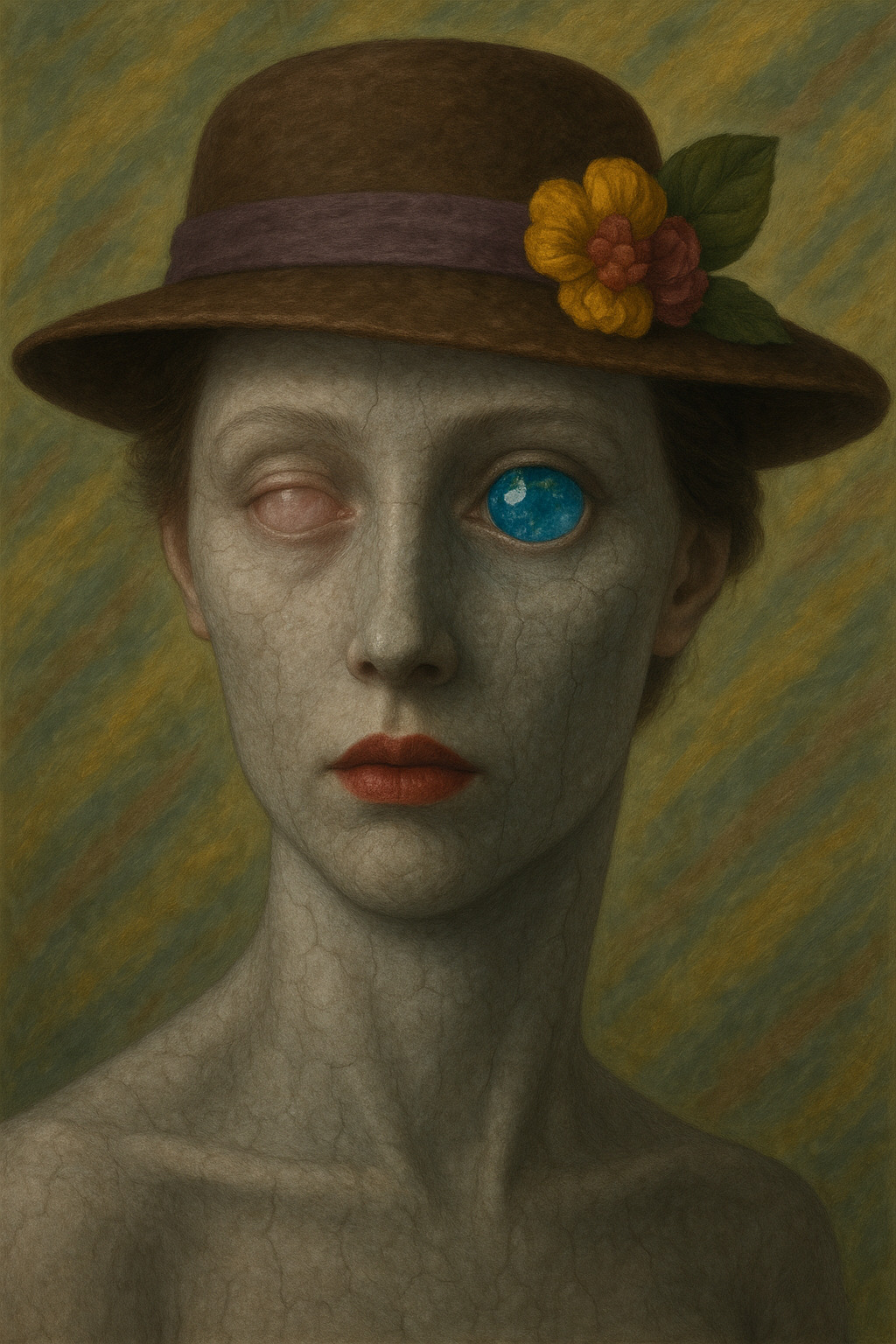
Create a surrealist portrait of a figure with an elongated, grey-toned face that warps and curves unnaturally. The figure should wear a large, brown vintage hat adorned with vibrant fabric flowers and leaves. One eye contains a vivid swirl of blue resembling Earth, while the other is filled with a hazy pink void, suggesting contrasting perceptions or inner conflict. The lips are full and painted red, slightly parted against the expressionless face. Set the figure against a textured, dreamlike background with diagonal strokes of green, yellow, and brown, evoking movement and confusion. Emphasize asymmetry, emotional ambiguity, and a feeling of disconnection from reality.
Edit 1
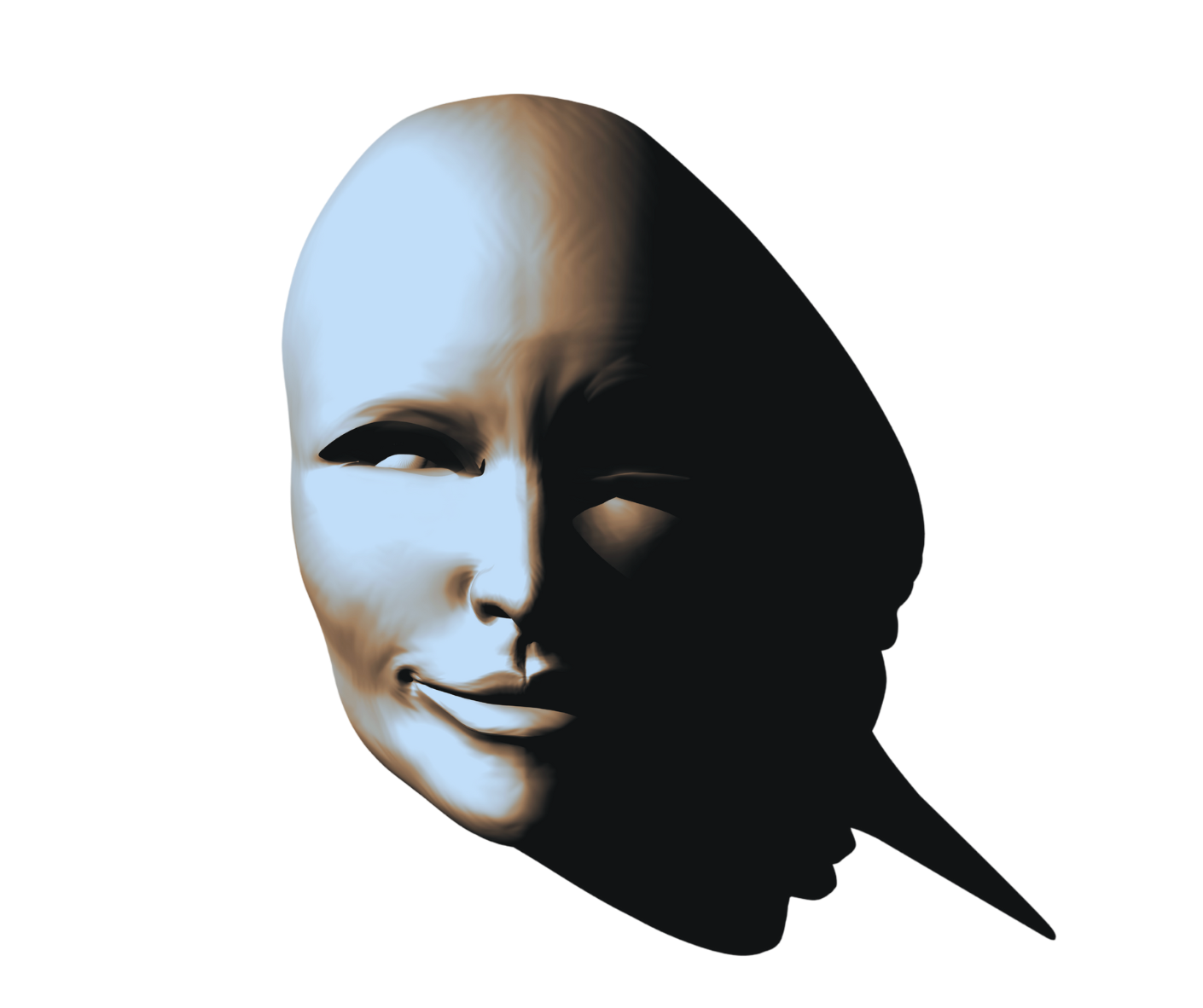
keep the shapes of everything and make her look like she’s made out of stone with gems for eyes and a fabric hat
Edit 2


Feed the Paws…
💜 Help keep the chaos caffeinated and the cats in biscuits. Every crumb helps. Whether you’re funding feline existential monologues, glitchy portals, or late-night creativity spirals, your support feeds the moglets (and occasionally, the magic). 🐈⬛
Make a monthly donation
Make a yearly donation
Choose an amount
Or enter a custom amount
Thank you, fellow wanderer. Your generosity has been noted in the Book of Kindness, which the cats may or may not use as a pillow.
Your contribution is appreciated.
Your contribution is appreciated.
DonateDonate monthlyDonate yearlyDiscover more from River and Celia Underland
Subscribe to get the latest posts sent to your email.
