

INSTALLATION LOG // >
Exhibit Entry Fourteen Distortion Dialogue

In the Realms of the Unreal: Henry Darger
What about the artists who reject everything except the act of making?
The ones who work in secret, behind closed doors, meticulously constructing entire worlds no one else will ever see.
They don’t chase galleries, agents, or algorithms.
They don’t make art for the world — they make it despite the world.
Art as survival.
Art as ritual.
Art as the only answer to a question no one else is asking.
Today we’re talking about Henry Darger — the ultimate outsider.
A man who spent his life hidden away, creating a universe that was too big, too messy, and too heartbreakingly personal to fit inside any gallery anyway.
His work wasn’t optimized for attention.
It wasn’t engineered for clicks.
It was a private mythology stitched together out of loneliness, obsession, faith, and grief.
And it stands today as the absolute opposite of AI-generated art:
Not a simulation.
Not a style exercise.
But a raw, unwieldy testament to the human need to create, even when — especially when — no one is looking.
“The storm grew worse, and the blinding lightning and deafening thunder was the worst I had ever seen or heard in my life.”
-Henry Darger, In the Realms of the Unreal

Henry Darger 1892–1973
Darger’s work wasn’t a product.
It was a lifeboat.
One of the most valuable courses I took in college was a basics course — Art Foundations 1. There were three of these classes, but the first one was unique because of the professor who taught it. He believed the true foundations of art weren’t technique, but theory — and more importantly, learning about yourself. One of our first assignments was to make a list of one hundred things that made us who we were. It had to be deeper than favorite colors or surface-level trivia. It was strange, uncomfortable, but it cracked something open. It forced us to connect with what made us artists in the first place.
We touched on outsider artists like Darger. We talked about art as a survival mechanism — and at that time in my life, it absolutely was.
It still is.
I’ve found that when I’m making things for myself first — not for an audience, not for a platform — those things tend to be the most accessible to other people. There’s a reverent respect from artists who exhibit for artists who never feel the need to. One isn’t better than the other. But both, in their truest form, are about making a place to survive in.

Darger’s art exists in the tension between innocence and violence, wonder and horror. His magnum opus, The Story of the Vivian Girls, is a sprawling battle cry for the protection of children — yet the imagery often swings wildly between tender guardianship and brutal depictions of suffering. The heroes are small, fragile girls fighting monstrous forces. But the battles themselves are grotesque, sometimes unbearable. It’s uncomfortable. It’s contradictory. It’s real. Darger didn’t sanitize his world to make it palatable, because he wasn’t creating for an audience. He was transcribing a private mythology — a universe where good and evil collided messily, without clarity or justice. His contradictions weren’t flaws. They were the honest byproduct of someone trying to survive their own mind.
Darger’s work reminds me that true self-expression isn’t always easy to look at. It isn’t always coherent. It doesn’t owe anyone a tidy moral lesson. It doesn’t have to resolve into something marketable or easily digested. It just has to be honest. And maybe that’s the deepest rebellion of all: to create something that doesn’t beg to be liked, that doesn’t bend itself to fit an audience. To make something solely because it needed to exist — to bear witness, however fractured, however raw.

Darger’s work — sprawling, obsessive, contradictory — is uniquely, unmistakably human. It carries the fingerprints of imperfection, of trauma, of imagination stretched thin over the cracks of survival. There’s no algorithm in the world that could have produced The Story of the Vivian Girls. No model can simulate the desperate, private urgency that drove him. AI-generated art, for all its technical prowess, exists to imitate coherence, to please, to replicate. It smooths over the mess, erases the contradiction, flattens the wound. Darger’s work doesn’t do that. It thrashes. It repeats. It contradicts itself and keeps going. It’s a reminder that creating outside of the “norm” — outside of public recognition, commercial viability, or even conventional taste — can yield worlds that are strange and luminous and terrifying and beautiful. It’s a reminder that real art isn’t polished or optimized. It’s cracked open. It’s messy. It’s alive
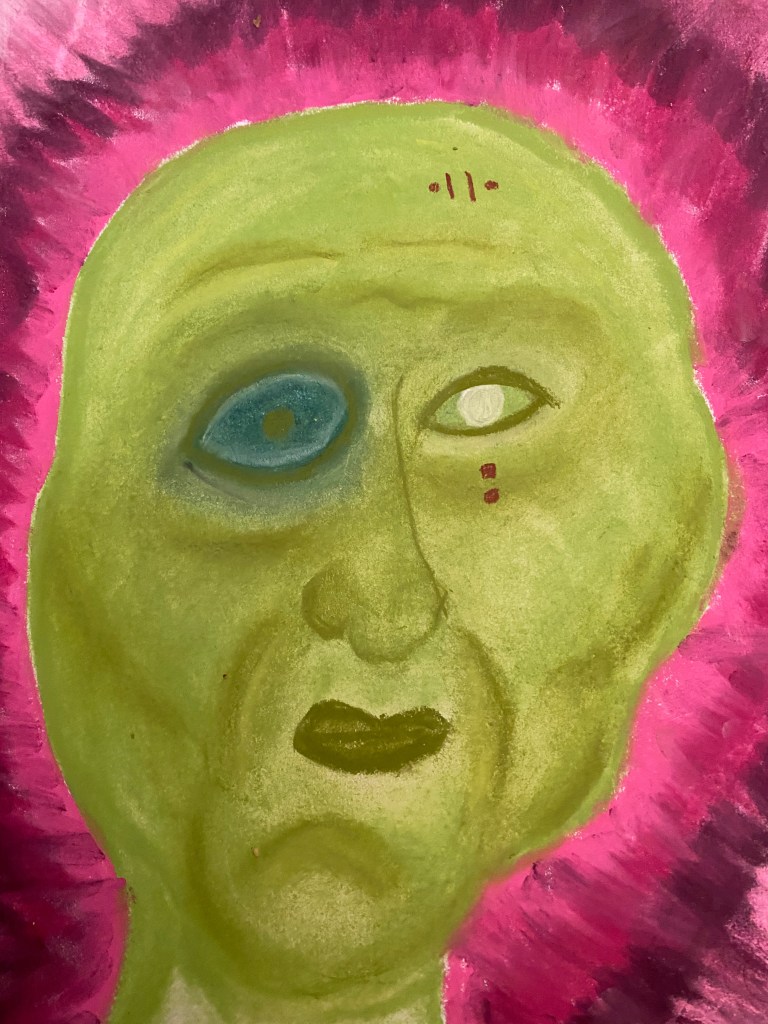
Prompt+Original
Create a surreal portrait of an aged, alien-like figure with green, almost translucent skin. The figure has a heavily wrinkled, mournful face, and two unsettling eyes: one is clouded and pale, the other is vividly bruised with a deep blue hue surrounding a muted golden pupil. Above the figure’s brow, etch small red vertical marks, almost ritualistic. A dark, somber mouth conveys a mixture of disapproval and resignation. Surround the head with an intense halo-like burst of magenta and deep crimson, blending roughly into darker shades at the outer edges. The overall atmosphere should feel eerie, dreamlike, and melancholic, as if the figure is caught between worlds.
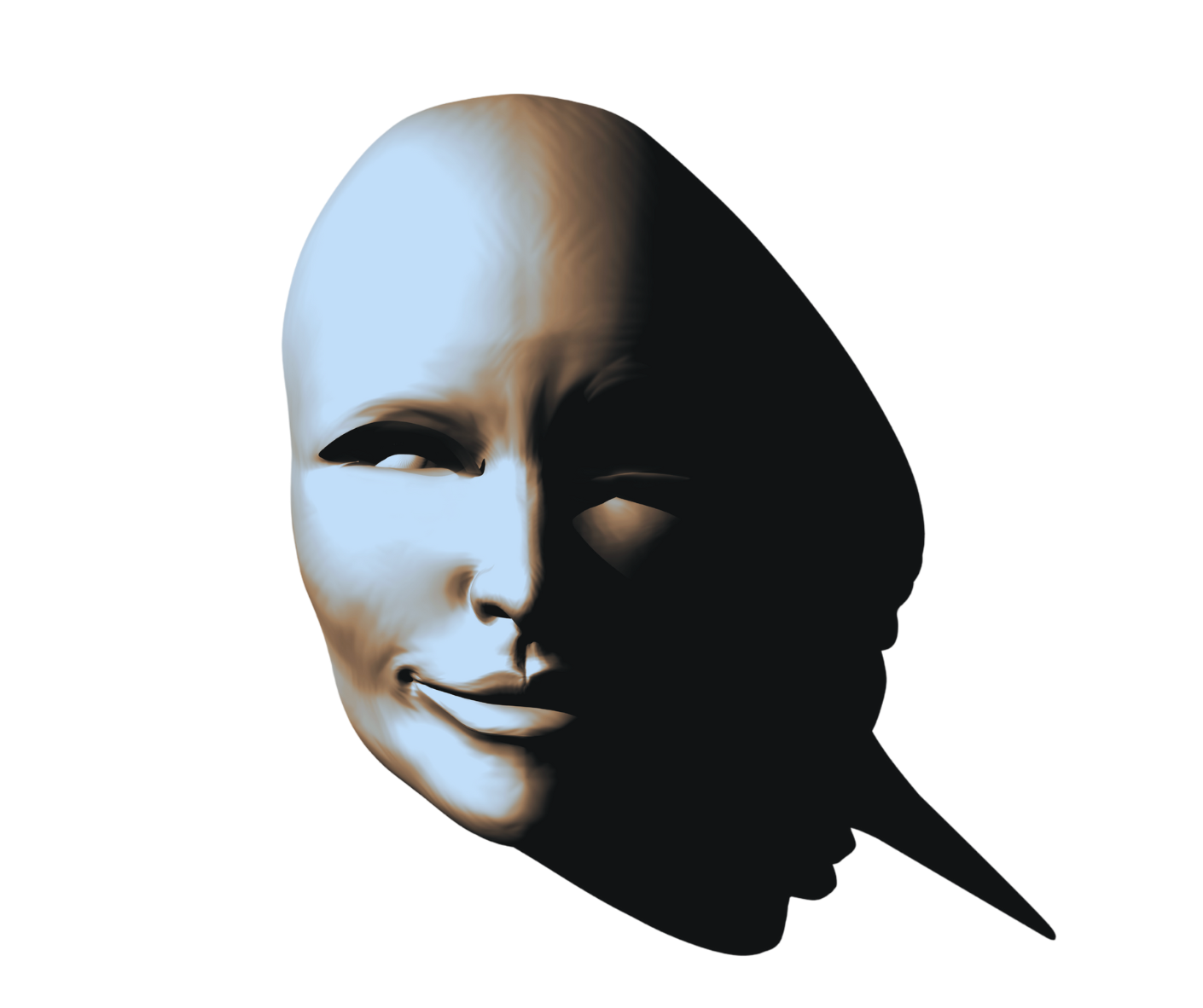
Edit 1+1.2 +1.3
Folk art please
Edit 2
cartoon


Discover more from River and Celia Underland
Subscribe to get the latest posts sent to your email.
