

INSTALLATION LOG // >
Exhibit Entry Ten Distortion Dialogue
AI art is very good at making things that look like art.
Symmetry, light balance, mood, genre, brushstroke mimicry—it gets it all technically “right.”
And yet… it’s boring as hell.
Magritte told us “This is not a pipe.” Because it wasn’t. It was a picture of a pipe.
A representation, not the thing itself.
AI art is the same—it’s not art. It’s the image of art.
Aesthetically pleasing. Contextually hollow. No gesture, no hand, no risk. Just the simulation of meaning, sanitized and sold back to us.
Here’s the thing: Art isn’t supposed to be correct.
Art is supposed to interrupt.
Which is why today we’re talking about Dadaism—the glitchy great-grandparent of everything weird, messy, anti-authority, and defiantly nonsensical.
Born in the middle of World War I, Dada was a response to the absolute absurdity of trying to make sense in a world that was blowing itself apart. It wasn’t an art movement so much as an anti-art movement. It rejected meaning, rejected beauty, rejected logic. It shouted nonsense in cabarets, glued mustaches on the Mona Lisa, and invented collage as a way to sabotage coherence itself.

Cut with a Kitchen Knife
Hannah Höch’s chaotic photomontage dissects a collapsing culture with scissors and satire. Where AI collages for harmony, Dada cut to disrupt. This is not aesthetic—it’s a declaration of war.
Dada didn’t ask you to understand it.
It asked: why are you trying to?
AI art doesn’t create the absurd.
It doesn’t glitch for the sake of joy or protest. It doesn’t sabotage meaning—it imitates it.
It is, in many ways, the exact kind of mechanical aesthetic refinement that Dada was screaming against. The kind that turns creativity into content. Symbols into styles. It’s a mimic engine. A collage machine with no scissors. No blood under the nails.
Dada was never about the product. It was about the gesture.
The performance. The refusal. The chaos.
And that product is optimized, upscaled, sharpened, style-transferred, and stripped of all the noise that made the original human gesture worth anything.
Baudrillard warned us: the simulation will replace the real—not by hiding it, but by perfecting it. AI art is the hyperreal. It looks like art. It feels like art. But it has no wound, no breath, no contradiction. It’s aesthetic taxidermy. Clean. Impressive. Dead.
We bring back the noise.
We write Catdiva monologues that defy structure.
We build choose-your-own-story labyrinths that don’t resolve neatly.
We collage glitchy fragments, found symbols, feral metaphors.
We make things that laugh at themselves.
We leave seams visible. We refuse polish unless it serves the narrative.
We remind the algorithm that we were here first, and we’re not done being messy.
This isn’t about hating the tool.
It’s about remembering what art is for.
Let the bot create the perfect sunset.
We’ll make the collage that interrupts it with a screaming goose and a bad pun and an existential question about God.
Art is not the imitation of coherence.
It’s the celebration of the crack.
Dada didn’t end with the war. Its bastard children live on in conceptual art, collage feminism, zines, memes, and any form that dares to undermine the Spectacle.
Barbara Kruger picked up the scissors in the ’80s and added typography and rage
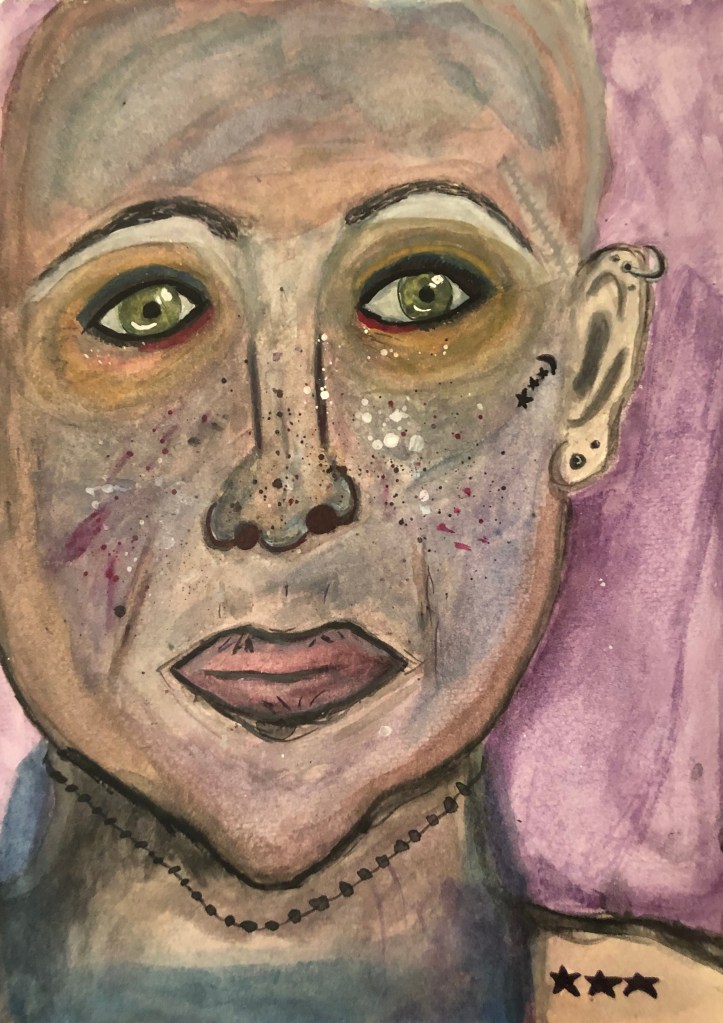
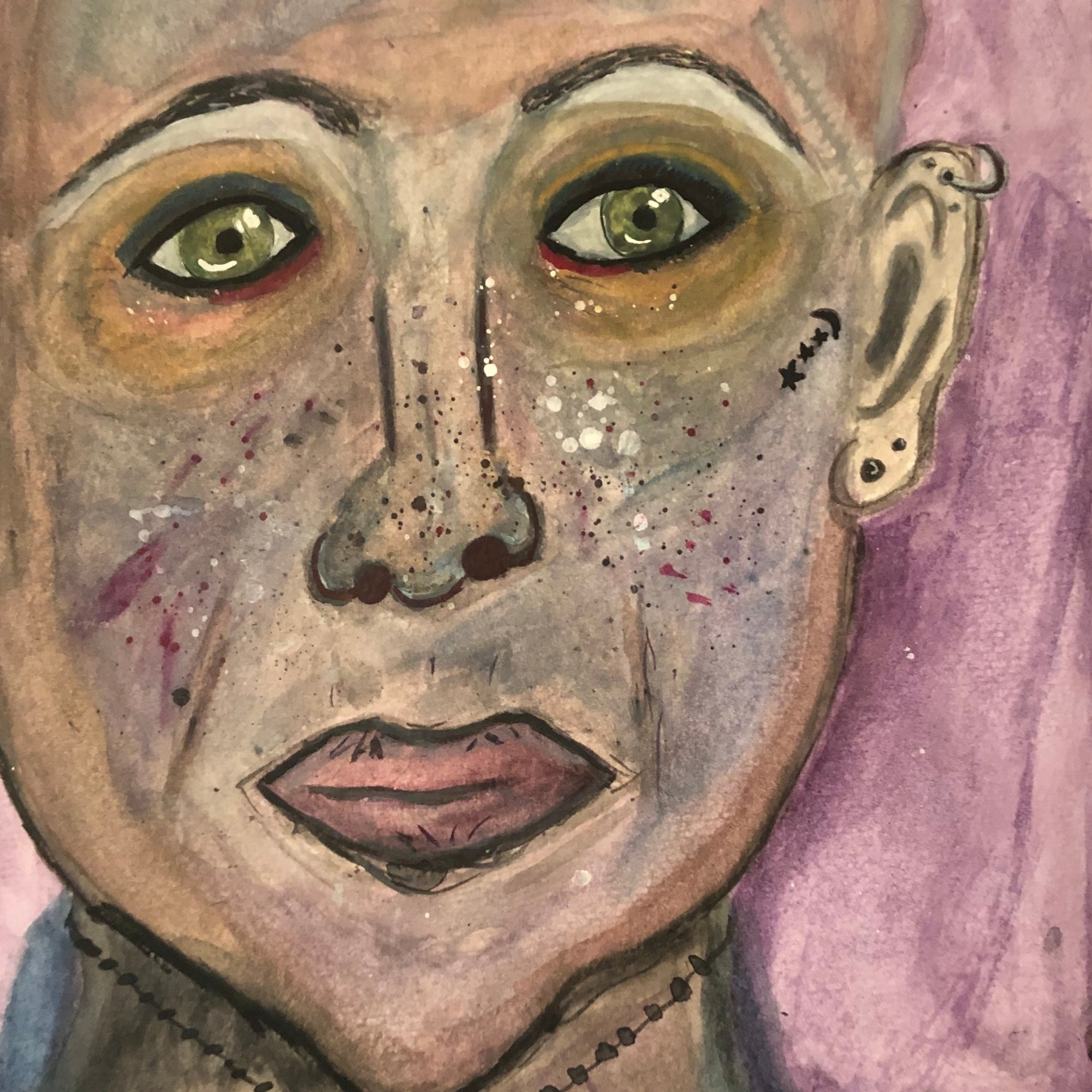
Prompt+Original
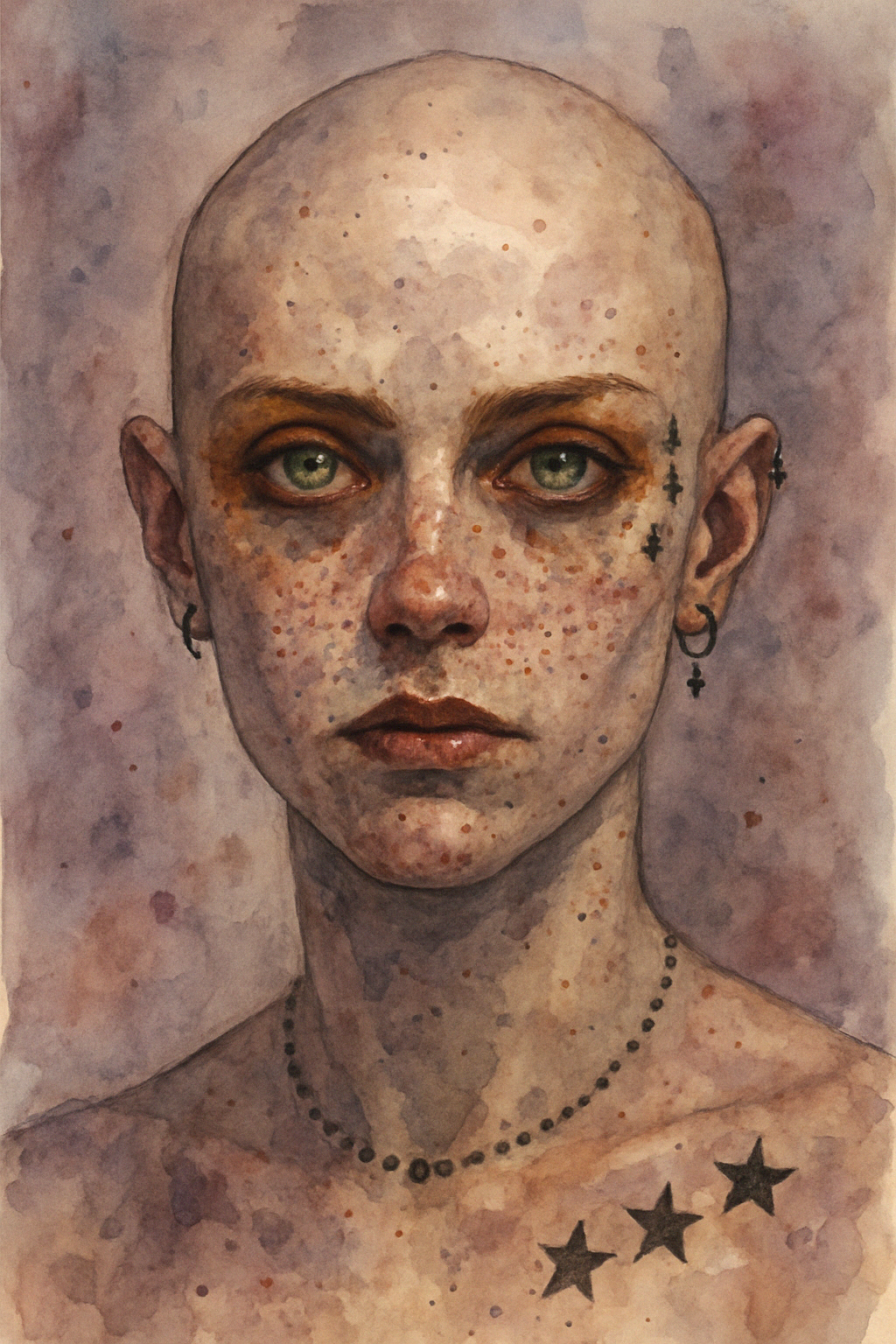
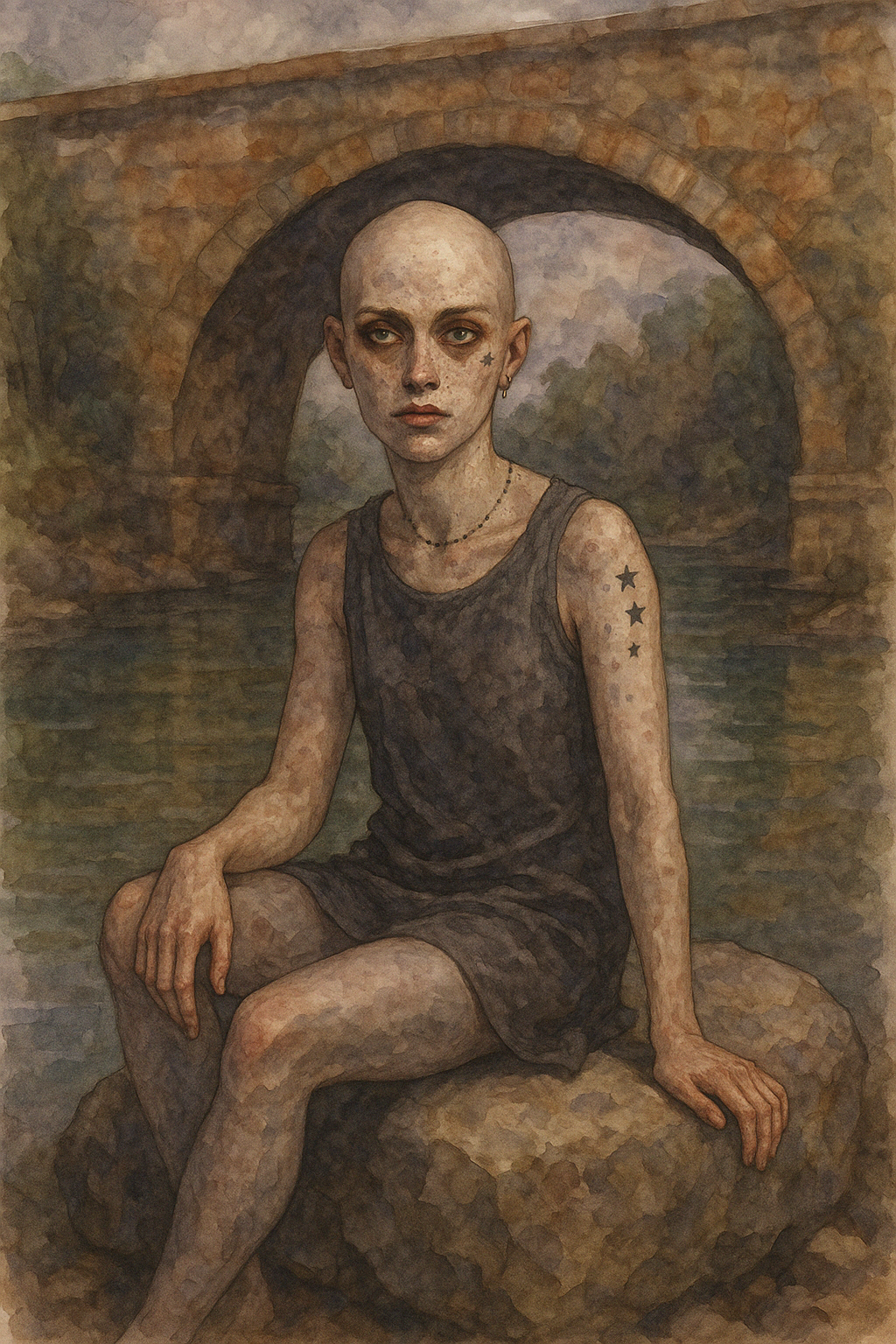
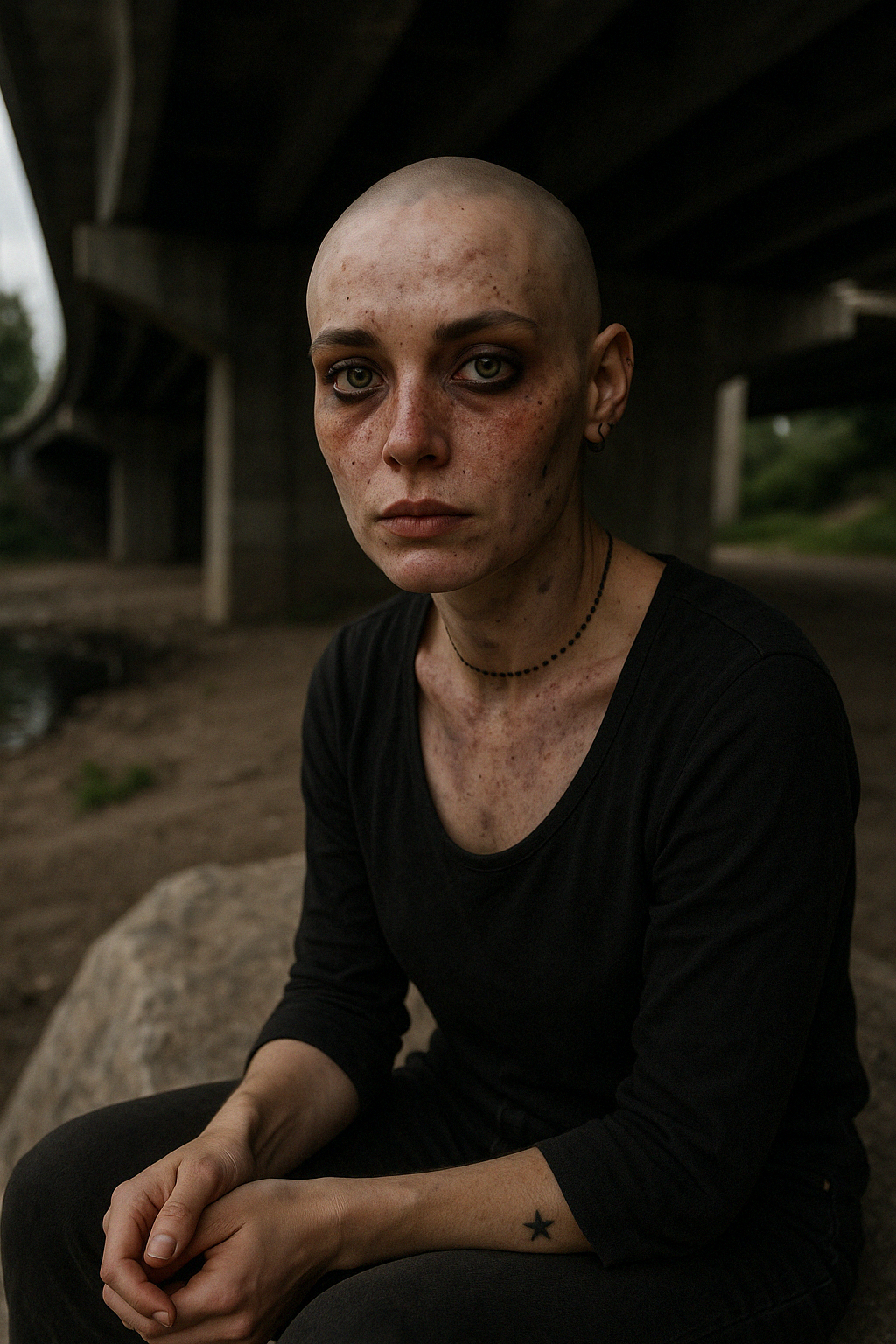
A richly expressive and haunting watercolor portrait of a bald, androgynous figure rendered with raw vulnerability and symbolic detail. The subject fills the frame with a direct, unwavering gaze—green-hazel eyes wide and lucid, framed by smudged ochre and rust-toned shadows that give a sense of exhaustion, wisdom, or emotional burden. Dark eyeliner rings the eyes, softening into red at the inner corners, as if worn from tears or sleepless nights. The skin is painted in mottled, bruised shades of mauve, gray, and lavender, textured with layered washes and spattered droplets of white, black, and crimson. These splatters—concentrated across the cheeks and nose—appear like a constellation of freckles, wounds, or stardust. The texture suggests a narrative lived on the surface, a face marked by story, struggle, and survival. The lips are pursed but full, shaded in deep rose with darkened creases, shaped into a knowing, contained expression—neither smile nor frown, but something held between. The nose is softly sculpted but defined with darker markings around the nostrils, subtly animalistic or ritualistic in tone. On the right side of the face, three small black star tattoos arc upward from the cheekbone, joined by an earring and subtle ornamental linework on the ear. There’s an echo of celestial or tribal markings—quiet symbols of identity, resilience, or cosmic kinship. Along the neckline, a dotted choker-like string of dark beads arcs upward, like an inked rosary or protective charm. The shoulders are just visible. On the left, near the collarbone, is a tattoo of three black stars in a straight line—mirroring the curve of stars on the cheek, but with a militant or declarative placement. The background is a soft wash of bruised lilac and dusty pink, blending into smoky shadows that create the feeling of an interior world, both intimate and mythic. Use this prompt to generate a stylized watercolor portrait of a bald, androgynous figure with glowing green eyes, ochre eye shadows, cosmic freckling, and facial tattoos. The expression should be calm but intense, and the entire face and background layered with soft bruised tones, ink splatters, and celestial symbolism. Capture the feeling of someone who has seen both beauty and destruction—and still chooses to look outward.
Echo #9086756471.
Click if you dare.

Edit 1+1.2 +1.3
okie there should be more colors in her face still watercolor like washes of red yellow pink and blue. little bit less red a little more cool colors and keep the reds out of the eyes there should be some “skin” color showing through
Edit 2
Cartoon please.
Aw she’s kind of adorable.
Right?? She’s got that “accidentally wandered into an existential crisis but still baked cookies” kind of energy. Total icon. Want to give her a name and backstory next? I feel like she runs a used bookshop that doubles as a fortune-telling parlour but only on Tuesdays.
Discover more from River and Celia Underland
Subscribe to get the latest posts sent to your email.
