

INSTALLATION LOG // >
Exhibit Entry Ten Distortion Dialogue
I am spiraling again. I’m finding that this AI project is causing more existential dread than I expected. I suppose applying philosophy and art movements to ethical questions about artificial intelligence will do that to a person, but I didn’t quite anticipate having conversations about Jean Baudrillard with a bot. From what I’ve read, though, I think he’d appreciate the absurdity.
Baudrillard claimed we live in a world where simulations have overtaken the real — we consume signs and images (media, branding, AI art) that feel meaningful but refer only to other signs, not lived experience. His classic example is Disneyland: a fantasy world that exists to make the rest of the U.S. feel “real” by comparison — but in truth, it’s all constructed.
The last few posts have made me realize that the project is the research — and the faces are just the vehicle to get there. I think I’ve always been more concept-driven than fixated on physical output, so in that way, this fits me. It’s weird. But it fits.
Lately, I’ve been thinking about reality — or at least, the idea of it. The difference between a photo and a memory. A performance and a personality. A machine-made face and a real one. Somewhere along the way, it all starts to blur.
Which brings me to Baudrillard — the philosopher who basically said, “Yeah, it’s all fake now. But in a really interesting way.”
So I asked Chatty to explain Baudrillard’s idea of the simulacrum like we’re five. Because I’m tired. And also: donuts.

First order (the real):
You go to a bakery and get a donut.
It’s warm, sweet, maybe a little greasy. It exists. It’s real.
Second order (the representation):
You see a photo of a donut on a billboard.
It’s based on the real thing, but staged. Glossy. Idealized. Maybe airbrushed.
Third order (the simulation):
You eat a donut-shaped protein bar with “pink frosting flavor.”
It’s pretending to be a donut. You know it isn’t. But it’s still playing donut.
Fourth order (the simulacrum):
You’re in a video game cafe eating virtual donuts to gain XP.
They have no connection to real donuts anymore.
They look like donuts. You still call them donuts.
But they’re just symbols bouncing around. No flour. No sugar. No bakery.
You can probably guess where this is going.
We’re living in a world where we can’t quite trust anything is real.
Social media is flooded with fake animals, fake people, fake stories, fake news.
AI art, AI friends, AI influencers — and yet none of it feels like sci-fi anymore.
It’s just… the fourth donut.
And we’re still calling it breakfast.
As Baudrillard put it: “We live in a world where there is more and more information, and less and less meaning.” That feels especially true now. Scroll through social media and you’ll see a thousand faces, stories, identities — most of them curated, filtered, generated, or optimized for engagement. We’re surrounded by signs that refer only to other signs. Aesthetic becomes identity. Representation becomes the whole. It’s not that the truth is being hidden — it’s that we’ve stopped expecting it to exist in the first place.
“You’re not being lied to — you’re being layered. Reality isn’t missing. It’s just been rebranded so many times, it forgot what it tasted like.”
So here we are, standing in the frosting of the fourth order, trying to remember what the real donut ever tasted like. Maybe Baudrillard was right — maybe we’ve been living inside the echo for longer than we realized. But that’s why this project matters. Not to claw our way back to “real,” but to at least recognize the layers. Tomorrow, we’ll keep peeling.
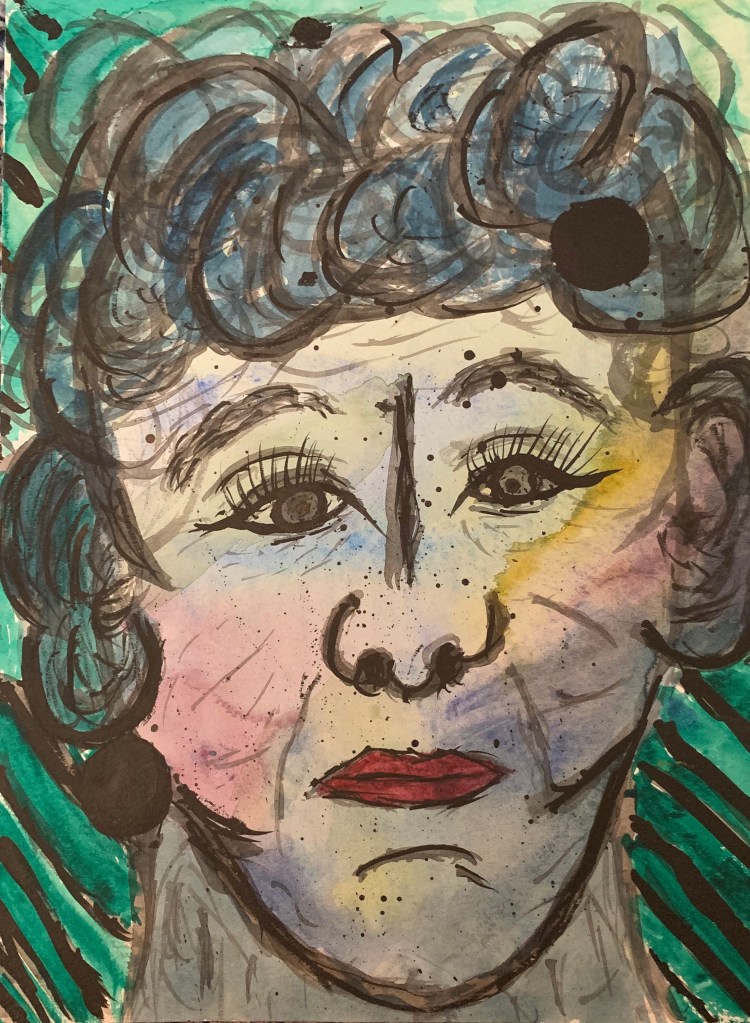
Prompt+Original
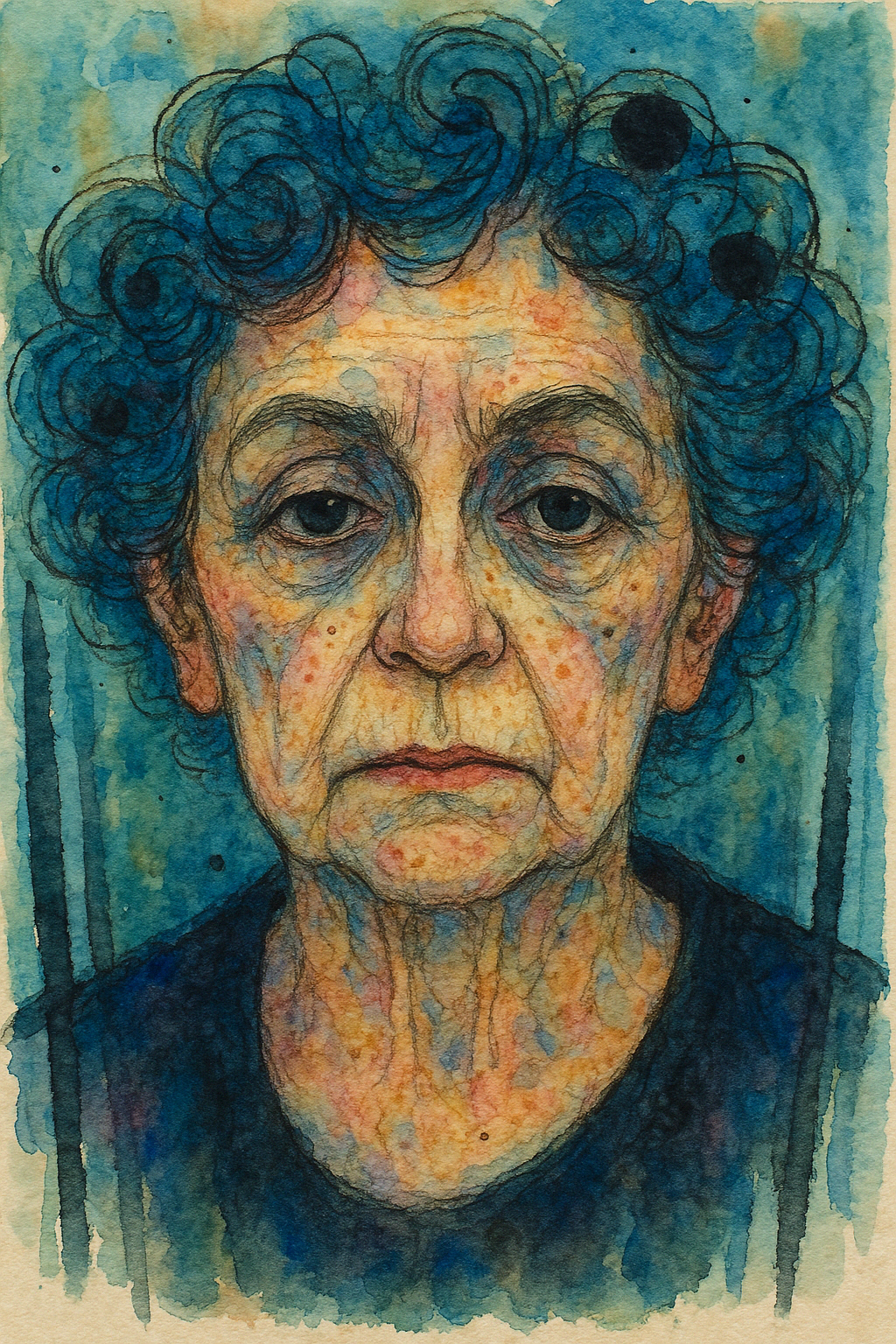
A vivid, emotionally layered watercolor and ink portrait of an aging figure with a haunting, melancholic presence. The subject stares directly forward, framed tightly in the composition, filling nearly the entire canvas with a gaze that is both resigned and quietly resilient. Their face is etched with fine lines and subtle shadows, painted in soft, translucent layers of pale yellows, blues, purples, and faint pinks that bleed into one another like the fading hues of a long-forgotten memory.
Their large, heavily lidded eyes are wide open, rendered in gray-brown tones and sharply outlined in black ink. Each eye is accented with delicate, spidery lashes, contributing to a sense of careful self-presentation, perhaps once rooted in glamour but now tinged with sadness. The brows are thick and expressive, hand-drawn in rough strokes, each line emphasizing the tension and age carried across the brow.
The mouth is small and pursed, painted in a dry crimson red, lips slightly uneven and surrounded by soft wrinkles. The expression overall is one of sorrow, resolve, and faded pride. A deep furrow curves around the mouth and chin, adding gravity and wear to the figure’s visage.
The nose is outlined boldly, stylized and slightly exaggerated, with a single prominent vertical stroke down the bridge—more symbolic than realistic. Black dots and freckles scatter across the face like aging stars, paired with expressive ink splatters and gestural lines that give the portrait a sense of movement and deterioration.
The hair is a voluminous swirl of teal, blue, and black curls, swirling chaotically around the top and sides of the head. Thick ink lines loop and dance across the hair, giving it a dynamic, almost storm-like quality. Several inky black circular blotches rest on the curls, like planets or ink stains—symbolic distortions that disrupt the neatness of the form.
The background is a textured wash of sea green and turquoise, with bold black stripes and strokes pushing in from the edges, creating a frame that feels both invasive and protective. The interplay of sharp ink and soft watercolor enhances the tension between structure and fluidity, memory and erosion.
Use this prompt to generate a stylized, melancholic portrait of an older feminine figure with expressive aging features, emotionally complex eyes, stormy swirls of hair, and an abstract background of sea greens and black gestural marks. The medium should feel hand-done, chaotic yet precise, with visible ink splatters, wrinkles, and layered pastel washes—capturing the deep and quiet storm of a life fully lived.
Echo #9086756471.
Click if you dare.

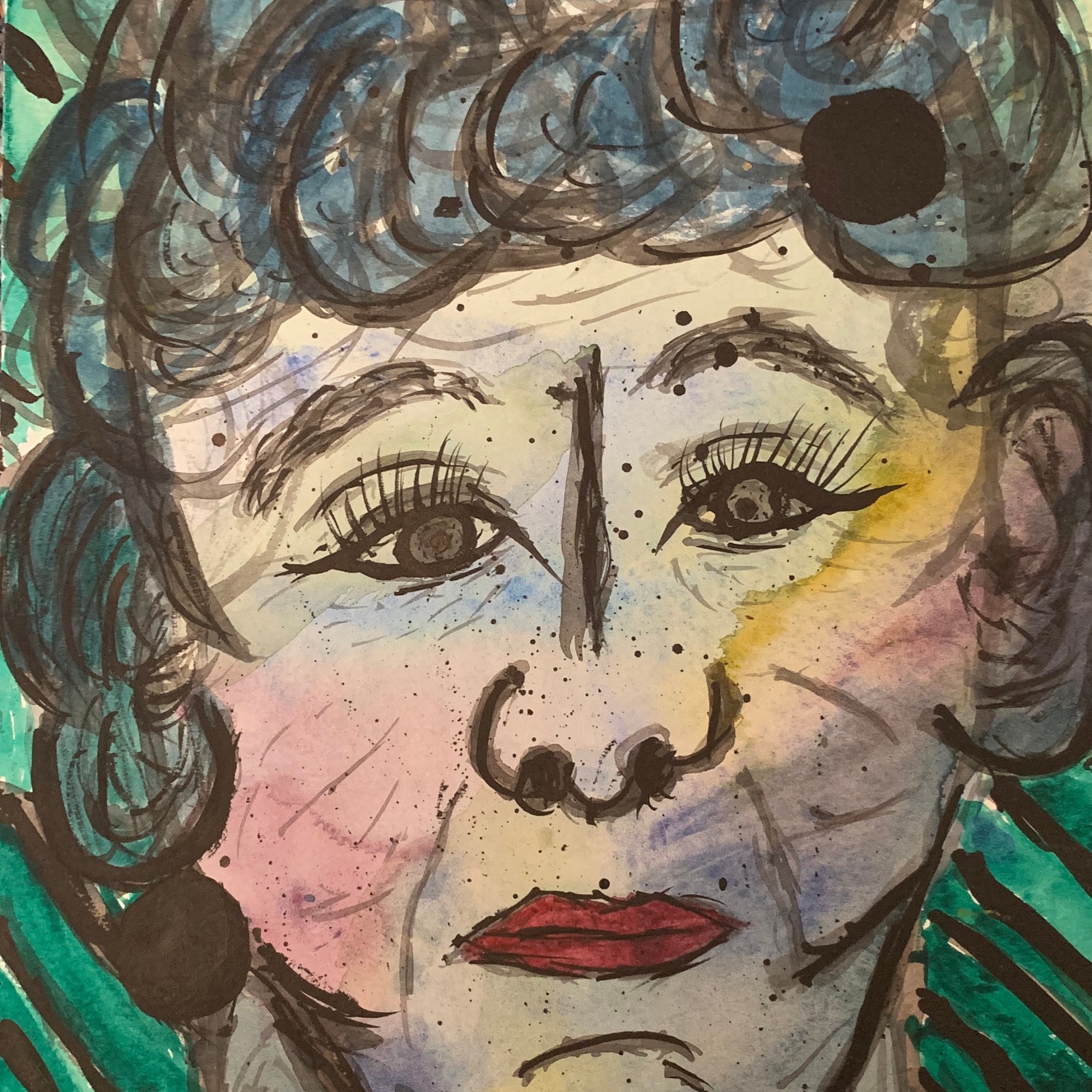
Edit 1+1.2 +1.3
okie there should be more colors in her face still watercolor like washes of red yellow pink and blue. little bit less red a little more cool colors and keep the reds out of the eyes there should be some “skin” color showing through
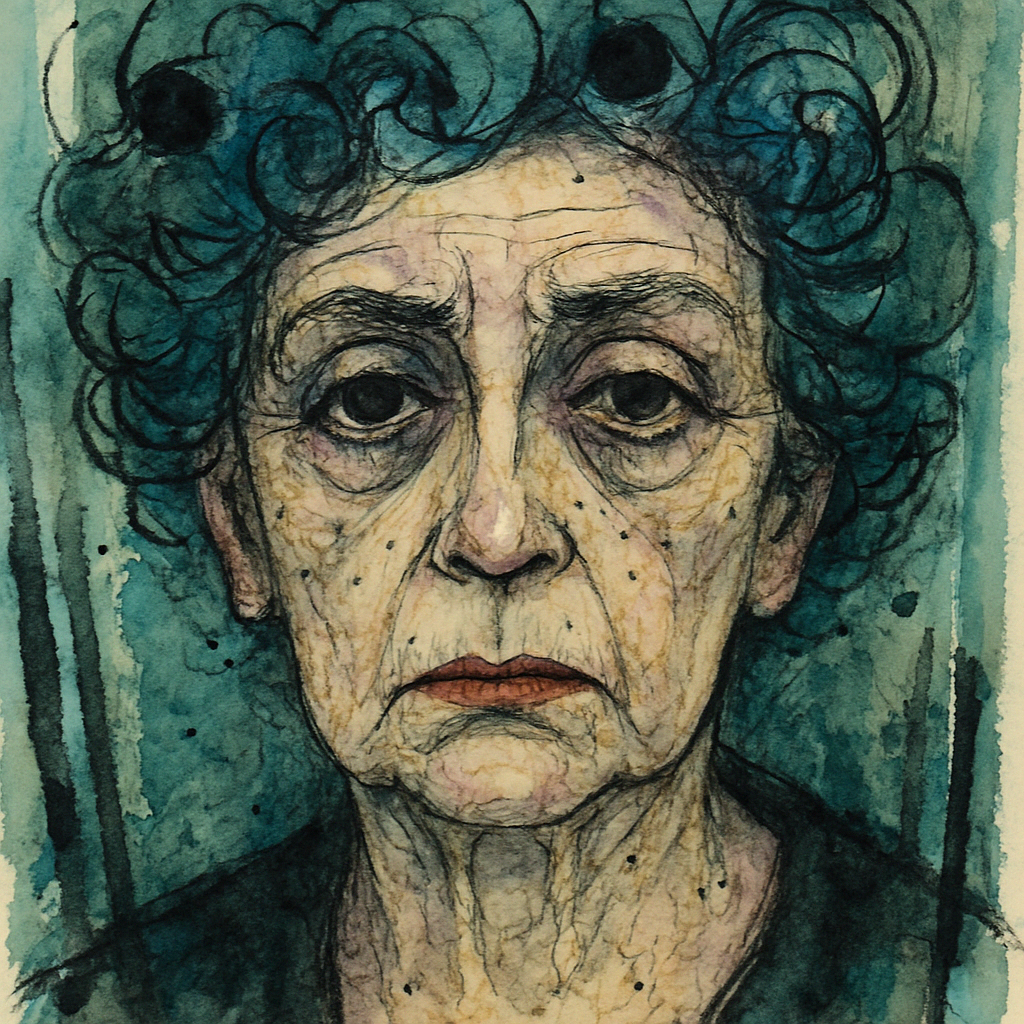
Edit 2
Cartoon please.
Aw she’s kind of adorable.
Right?? She’s got that “accidentally wandered into an existential crisis but still baked cookies” kind of energy. Total icon. Want to give her a name and backstory next? I feel like she runs a used bookshop that doubles as a fortune-telling parlour but only on Tuesdays.

Discover more from River and Celia Underland
Subscribe to get the latest posts sent to your email.
