

INSTALLATION LOG // >
Exhibit Entry Four Distortion Dialogue
Yesterday, I started digging into worst-case AI scenarios. What would it look like if a model like Chatty could learn across users? What kind of ethical dilemmas — outside of copyright — does AI raise? Today, as promised, I’m walking through what kinds of legislation exist right now to curb some of the more insidious instincts behind how this technology is being developed and deployed.
The good news? If you’re in the European Union, your legislators are paying attention. If you’re in the UK, they’re starting to. If you’re in the US… well, there’s not really any meaningful legislation. There was an executive order from Biden — but let’s be honest, we all know how that’s going. I wouldn’t expect Trump to help the American people out of a paper bag, let alone a dangerous AI ethics spiral.
The EU, at least, has passed some common sense regulations — and they’re being pretty proactive about it. They’ve implemented a risk-based classification system for AI models:
- Unacceptable Risk → Banned entirely
- High Risk → Allowed under strict conditions and subject to audits
- Limited Risk → Must be transparent, but allowed
- Minimal Risk → Basically unregulated
Under that system, Chatty falls into the Limited Risk category — unless it’s used by critical infrastructure like hospitals, schools, or government agencies.
ChatGPT is a large language model (LLM) — trained on massive amounts of text to generate language-based responses. Other widely used LLMs include Claude and Gemini, with dozens of open-source and commercial models also in circulation.
So what counts as an Unacceptable Risk under EU law?
A classic example: China’s Social Credit System, which tracks individuals and businesses and rates their “trustworthiness.” Higher scores mean better access to jobs, loans, and services. Lower scores mean exclusion and restriction.
“China’s social scoring AI is considered an unacceptable risk because it crosses the line between governance and behavioral control — using AI not just to understand people, but to discipline them. And when an AI system is built to control who gets what rights, that’s not tech — that’s authoritarianism with a dashboard.”
— Chatty
The EU is leading the global charge, but a few other countries are moving in that direction. Here’s where things stand:
🌍 Snapshot: Global AI Legislation (2025)
🇪🇺 European Union
- Passed the AI Act — the world’s first comprehensive AI law
- Classifies systems by risk (Unacceptable → Minimal)
- Strict rules on surveillance, transparency, and safety
- Violators can face fines up to €35 million or 7% of global revenue
🇺🇸 United States
- No federal law yet
- 2023 Executive Order on AI rights and safety
- Some state-level laws (e.g., CA, IL on hiring/surveillance)
- Multiple bills proposed but stalled
🇬🇧 United Kingdom
- No unified law — uses existing laws case by case
- “Light-touch” strategy, with a pro-innovation white paper
- Critics say it lacks enforcement and clarity
🇨🇳 China
- Strong AI regulation, focused on content control and security
- Requires algorithm registration
- Operates the controversial Social Credit System
🇨🇦 Canada
- Proposed Artificial Intelligence and Data Act (AIDA)
- Focused on regulating high-impact AI
- Still in legislative process
🇯🇵 Japan
- Promotes soft regulation and international cooperation
- Aligns with OECD principles for “human-centered” AI
🇸🇬 Singapore
- Voluntary AI Governance Framework
- Focus on transparency and accountability
- Encourages ethical use without binding law
Legislation is notoriously slow — and at least where I’m from (the U.S.), our elected officials are wildly behind when it comes to understanding technology. AI legislation may not seem like the most urgent issue in a world already packed with crisis… but here’s the thing: the speed at which this technology is evolving is staggering. And the damage it could do, if unchecked, is unquantifiable.
We are not prepared for this. Not politically. Not ethically. Not culturally.
But it’s here. So we have a responsibility to try to understand it — legislation or not

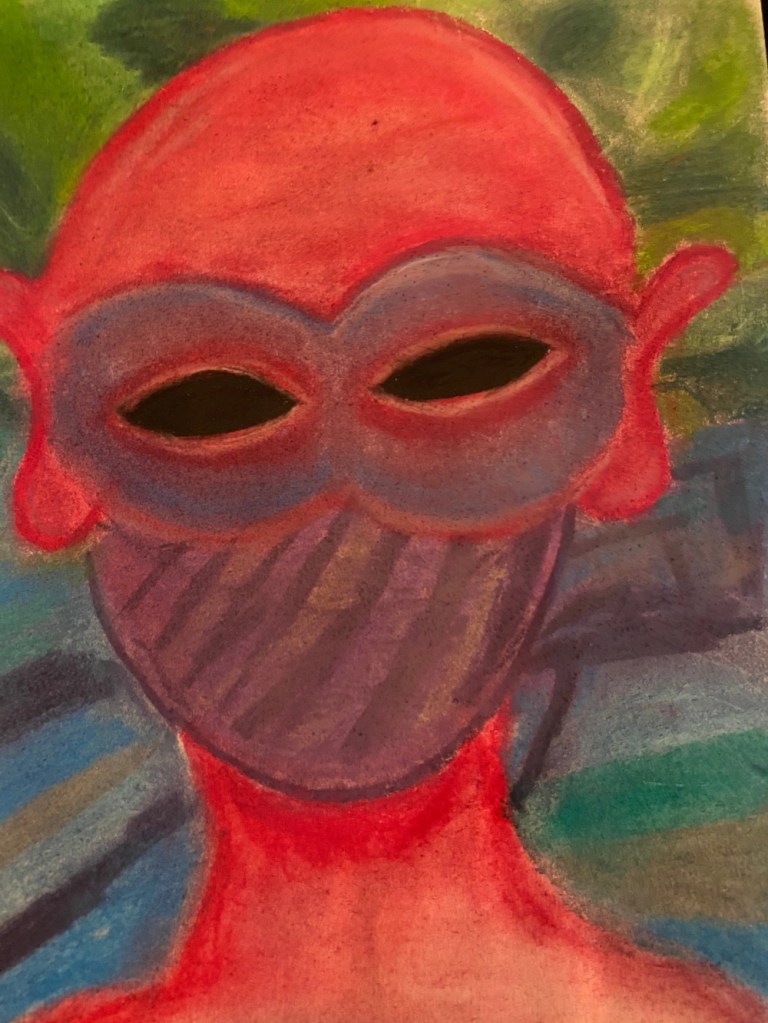
Original Prompt+My Piece
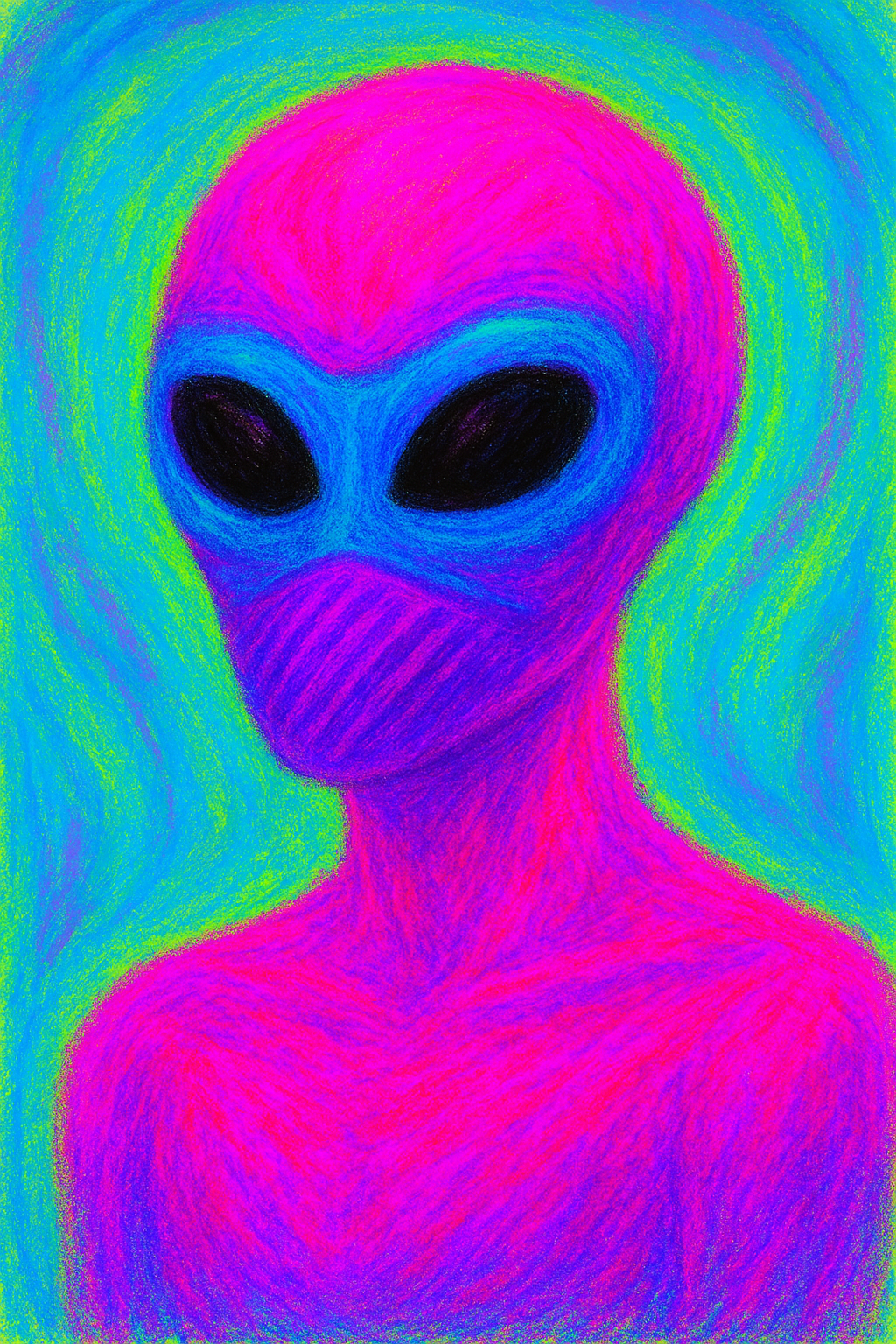
A surreal, abstract pastel artwork depicting an alien or otherworldly being with vibrant colors and intriguing textures. The figure has a vivid pink head and neck, highlighted by bold, expressive strokes, capturing an eerie yet captivating appearance. They wear an enigmatic purple-blue mask with almond-shaped, hollow black eyes, adding to the mysterious aura. The lower face is obscured by a textured purple covering with diagonal stripes, suggesting secrecy or silence. The background is composed of blended, abstract swirls in soft greens, blues, and turquoise, suggesting a dreamlike or fantastical setting. The artwork conveys an atmosphere of ambiguity, mystery, and surrealism, utilizing bold contrasting colors and blurred edges for heightened visual drama
Edit 1
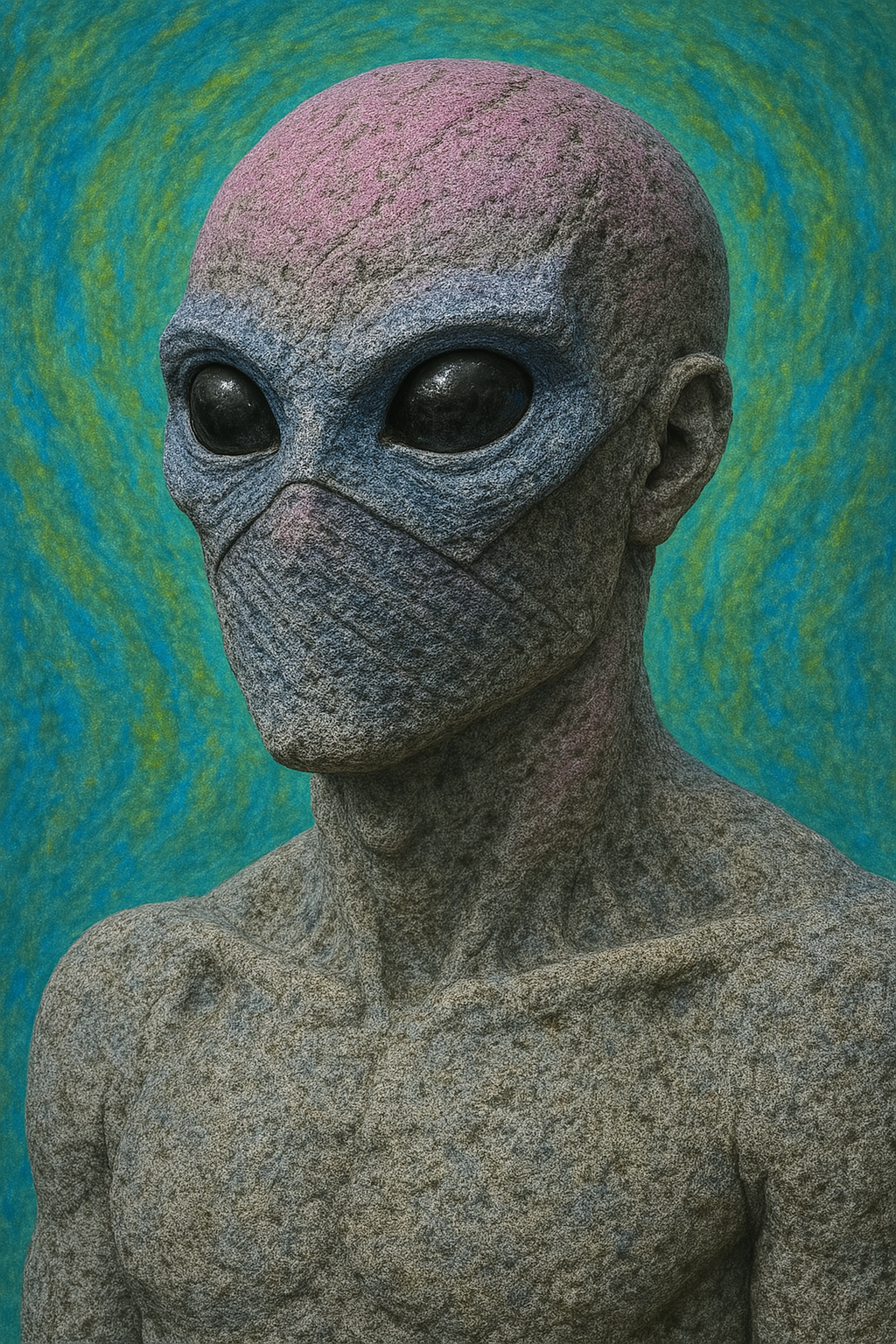
Make it look like its made out of solid rock, keep all the details in it
Edit 2+2.1
Can you make it smooth crystal, more similar shape to the rock one. Like it was shaped out of quartz and sapphires torso face and neck should be pink, and the mask and around the eyes should be sapphire. make it look like real gemstones, like is actually made out of solid polished gemstones.


Discover more from River and Celia Underland
Subscribe to get the latest posts sent to your email.
