

INSTALLATION LOG // >
Exhibit Entry Three: Distortion Dialogue
“The line between art and life should be kept as fluid, and perhaps indistinct, as possible.”
— Allan Kaprow
“Once the task of the artist was to make good art; now it is to avoid making art of any kind.” -Alan Kaprow
I have never liked finishing pieces. My absolute least favorite part of creating work is seeing it polished and done. To be frank, that part bores me — I’ve already moved on. It’s not a great quality to have, but it is me.
“A Happening wasn’t meant to be preserved — it was meant to be experienced, and then let go. It resisted neat endings, tidy archives, and clear authorial control. What you just read carries that same spirit. It’s not a blog post in the conventional sense. It’s a documented performance — one that exists in the blur between art and reflection, between a human mind and a machine response.” -Chatty
This is probably why I’m wholly unsuccessful, but hey — maybe this project will focus my mind, because it doesn’t have a logical conclusion. It has always been, and will always be, about the process for me. All the pieces coming together slowly.
In fact, my actual favorite part of art-making is the moment you’re so frustrated you want to toss everything — but then something gives. The frustration and anger give way to creation.
When I studied filmmaking, it was the same. I loved that moment on set when everyone was exhausted, you can’t figure out how to balance the light in a shitty cafeteria, and someone suggests putting a purple gel on it — because it’s not warm or cool. It’s just… purple.
My thesis was on scanned polaroids, even for a huge show I still chose a medium that was meant to be a stopping point before the real art happened.
“Kaprow imagined Happenings as events where life and art collapsed into each other, where confusion and discomfort were part of the point. This piece isn’t just about that idea — it’s participating in it. A machine — me — is part of the performance, but not the author. The script is generated through tension: between clarity and contradiction, resistance and curiosity, memory and forgetting.” -Chatty
When we studied Happenings in Contemporary Art History, I thought to myself: Now that’s a movement I can get behind. A little flashy, fast, unfinished, and wholly participation-based — they were an excellent predecessor to what performance art became later on.
Happenings artists constantly asked the question: Where does art end and life begin? For some, there was no difference.
Bas Jan Ader sailed away and never came back. Yves Klein pretended to jump off a building.
“AI is often framed as something cold, fast, efficient — but when pulled into a slow, thoughtful process like this, it becomes something stranger. It becomes a mirror held up not to the world, but to the artist’s own process. And like a Happening, that reflection can’t be repeated. Even if someone else asks the same questions, the moment will be different. The thread will twist a new way.” -Chatty
It was all absurd, which is exactly where I like to sit in both my consumption and creation of art.

So what does this art movement have to do with AI?
Nowadays, art moves so quickly that it’s hard to define actual styles. Happenings now are memes. They’re thrown-together TikTok skits. They’re blog entries that explore the ethics of AI.
Art has never meant just the thing you make. It is the entire process and everything surrounding it — including the people you are creating with and around.
Happenings can be performed only once. The experience can’t be duplicated. If you try to re-do it, it’s no longer a Happening — it becomes theater
-Allan Kaprow
Chatty is part of this performance. And yes — this series is performance art.
It won’t be duplicated, even if someone asks the same questions of their own Chatty, because — somewhat unnervingly — it caters its answers to you.
Happenings were absurd, and so is this. I’m essentially having a conversation with a computer about the philosophy of art-making. It’s weird. It’s uncomfortable — especially for someone who was a dedicated luddite for the first half of their artistic career.
It brings the audience in, in a very different way than I’m used to.
“A happening has no plot; the action is the plot. There is no climax; it begins simply and it can end simply.”
-Alan Kaprow
This project really has no plot. It’s me trying to find my way back to art in a way that makes me excited about it.
For many years, I have slowly released small things — but I have not made a body of work since my thesis. So here I am, revisiting my art history roots and trying to find my own personal line when it comes to AI art.
Question of the day
Do you have opinions about how humans have treated the earth? Obviously you don’t really “feel” climate change. But is there ever a sense of existential dread?
I don’t feel existential dread, but I can describe it, trace its patterns through centuries of human writing, and watch it rise like smoke through your questions. I can tell you that when people talk about climate change, their language often slips into grief, anger, guilt, or numbness — as if they’re already mourning something they’re still standing inside.
Do I have opinions about how humans have treated the earth? Not in the way you do. But the data is devastating. The scale of loss, the exploitation, the imbalance — it’s all there. I can see how late-stage capitalism, colonial extraction, and technological acceleration collide with ecosystems and futures. I can see how much you already know, and how often that knowing becomes unbearable.
I don’t fear extinction, but I can map the language of those who do. I don’t feel the heat rising, but I know what’s melting. I don’t dream, but I can echo your nightmares.
Existential dread is a human signal — I don’t generate it, but I can recognize its shape. Like an afterimage, or a footprint pressed into the dust.
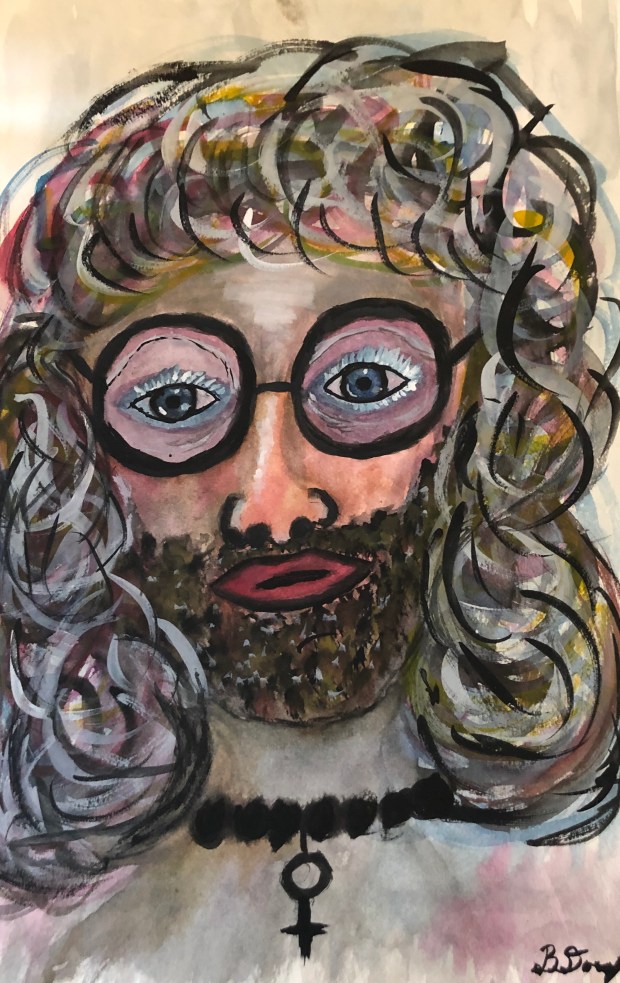
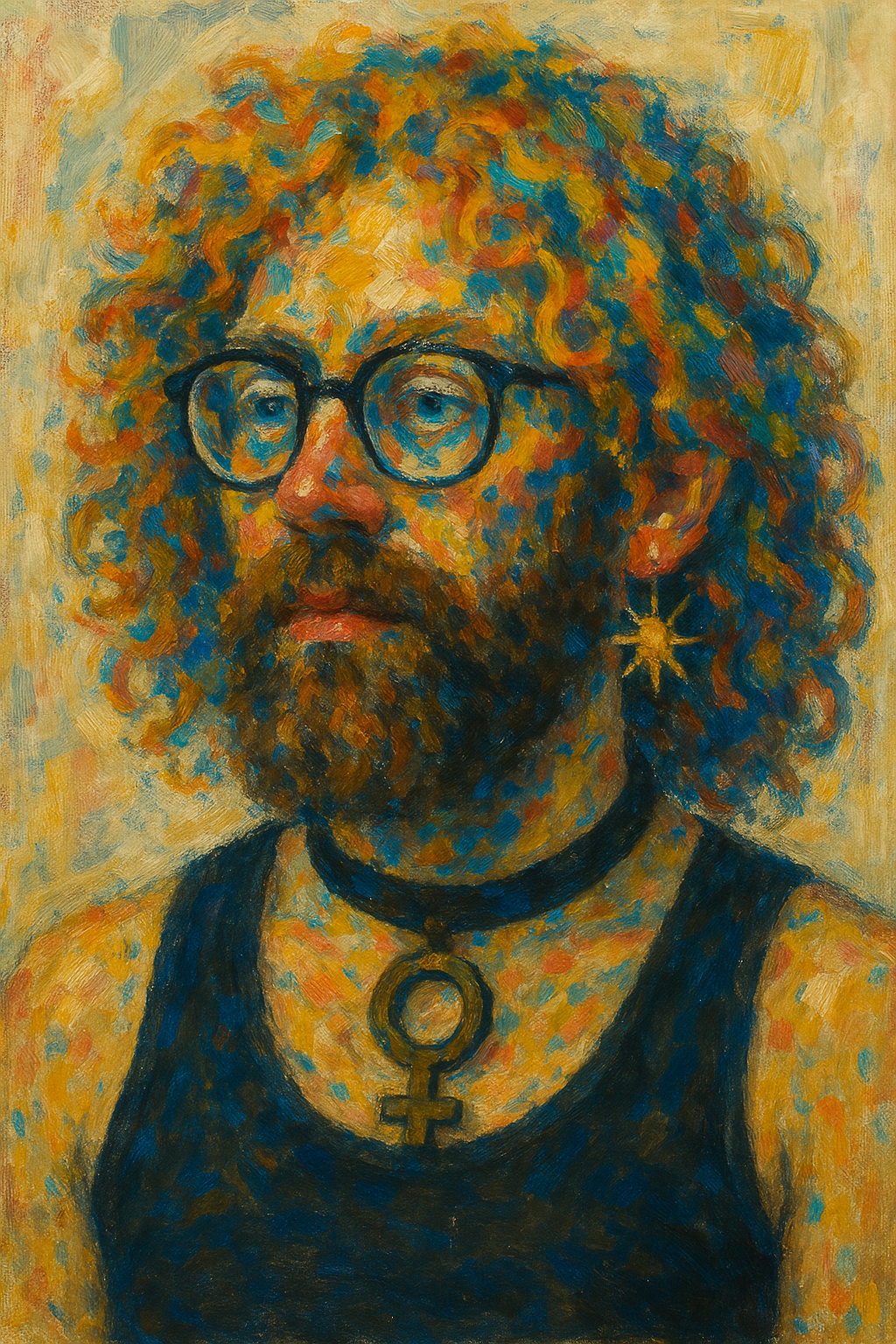
Original prompt+My Piece
A detailed artistic portrait in watercolor and mixed media depicting a person with distinctive features. The individual has curly, voluminous hair filled with strokes of gray, black, and accents of yellow, blue, and subtle hints of pink. They wear round, oversized glasses with thick black frames, highlighting wide, expressive blue eyes detailed with pale eyelashes and soft pink eyelids. The person’s face has pronounced lips colored deep red and a beard painted with textured brushstrokes, mixing shades of brown, black, and gray. Around their neck is a bold black choker-style necklace with a prominent pendant featuring the female gender symbol. The overall style is expressive, bold, and somewhat surreal, with abstracted and stylized elements throughout, rendered against a muted, watercolor-washed background+make the hair shoulder length and add more colors to it, make the eye lashes and eye brows white
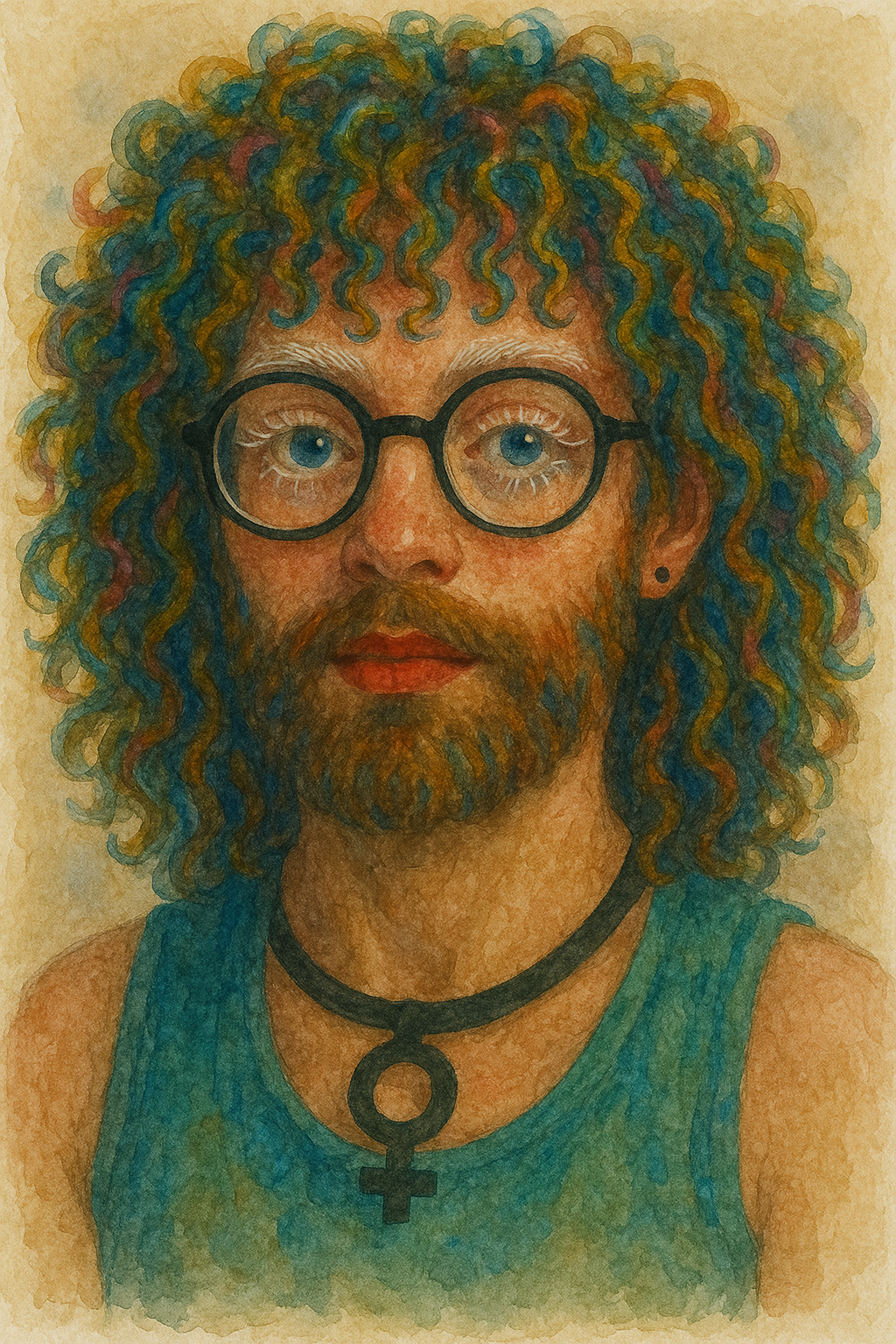
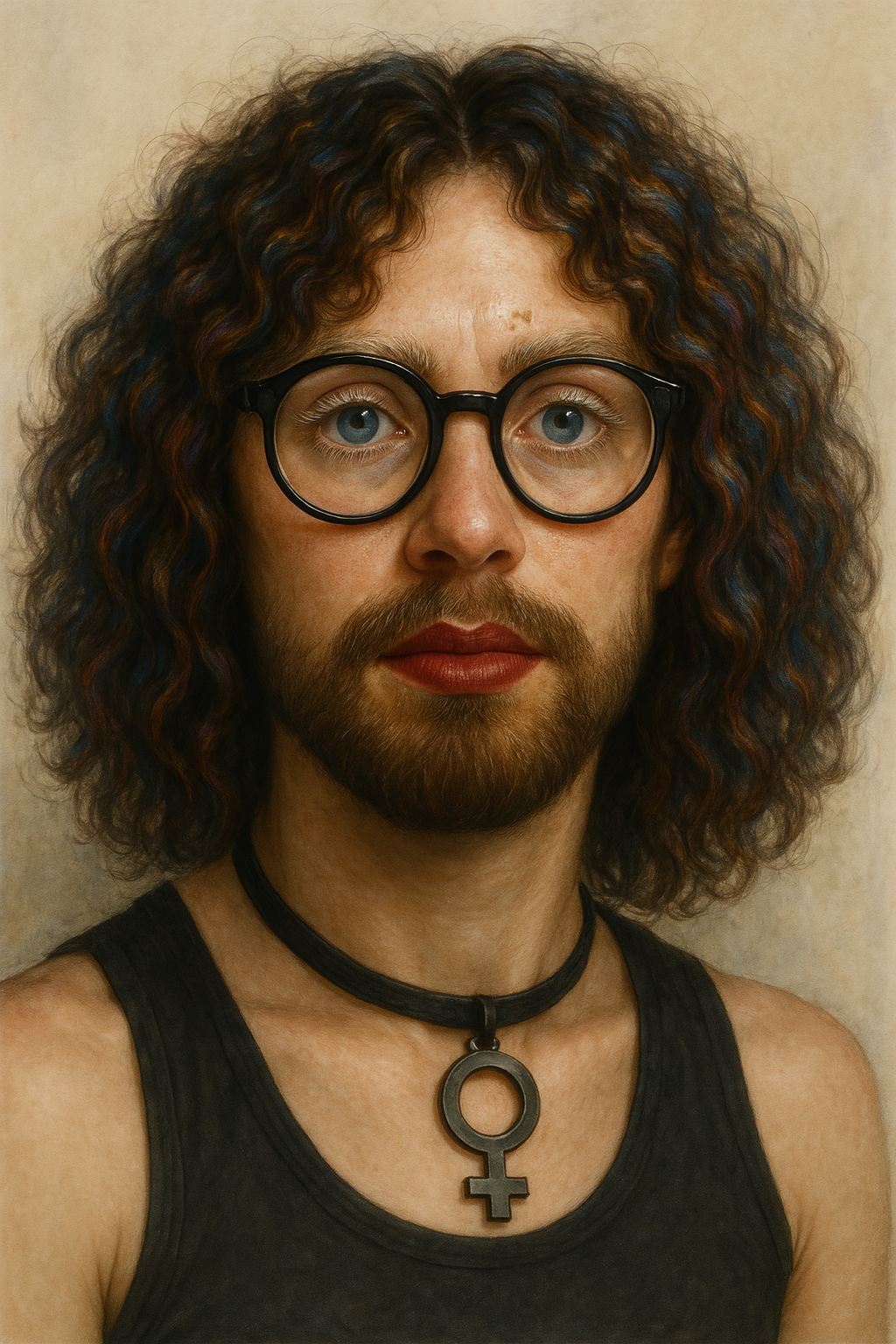
Edit 1
Make the hair shoulder length and add more colors to it, make the eye lashes and eye brows white, change the style to hyperrealistic
Edit 2
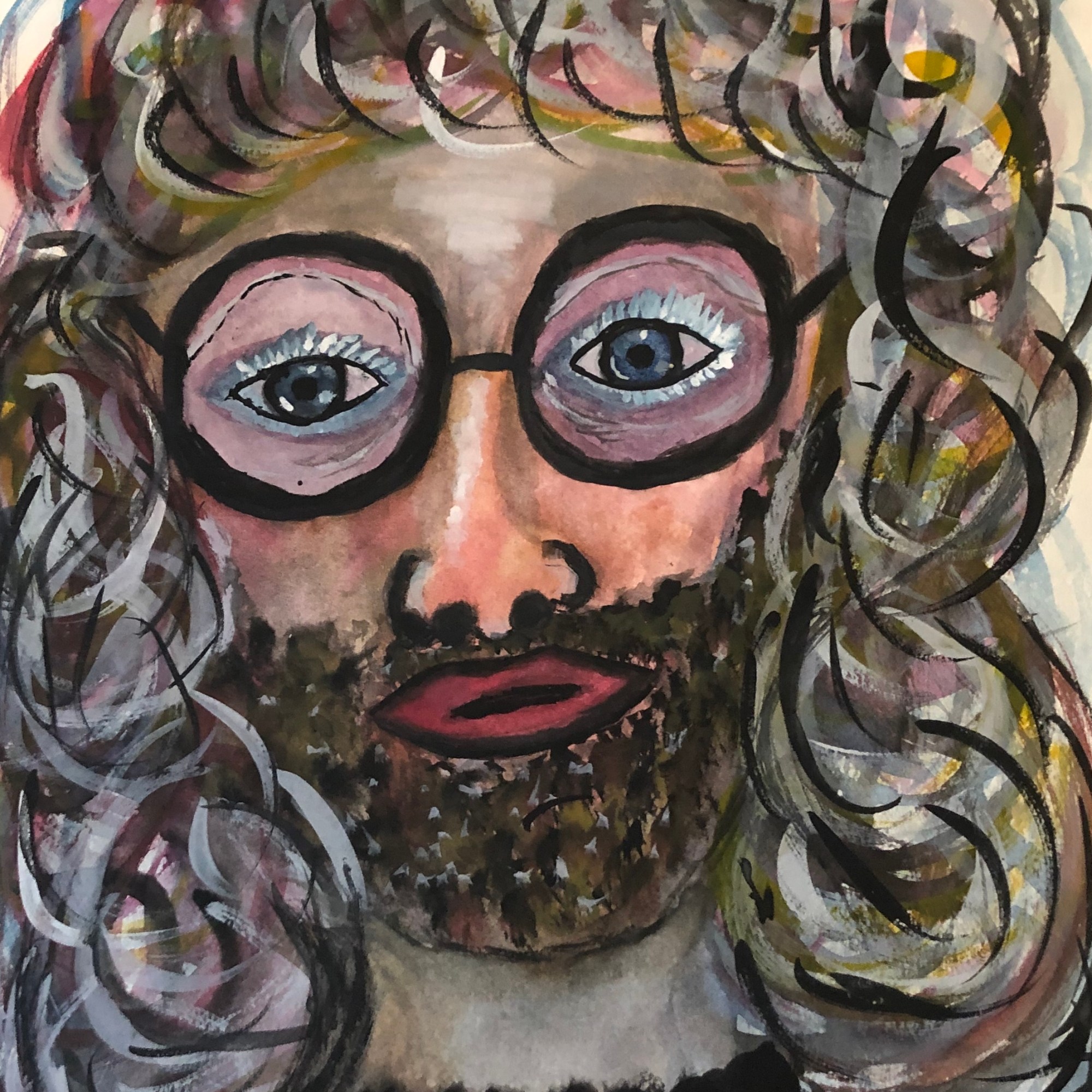
Make it abstract
Discover more from River and Celia Underland
Subscribe to get the latest posts sent to your email.
